Text credits: Fr. Jack Custer and Anonymous
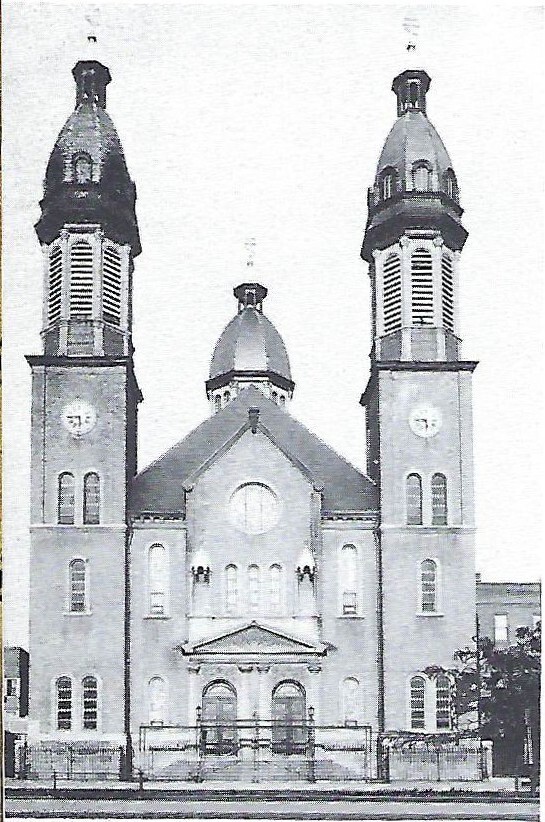
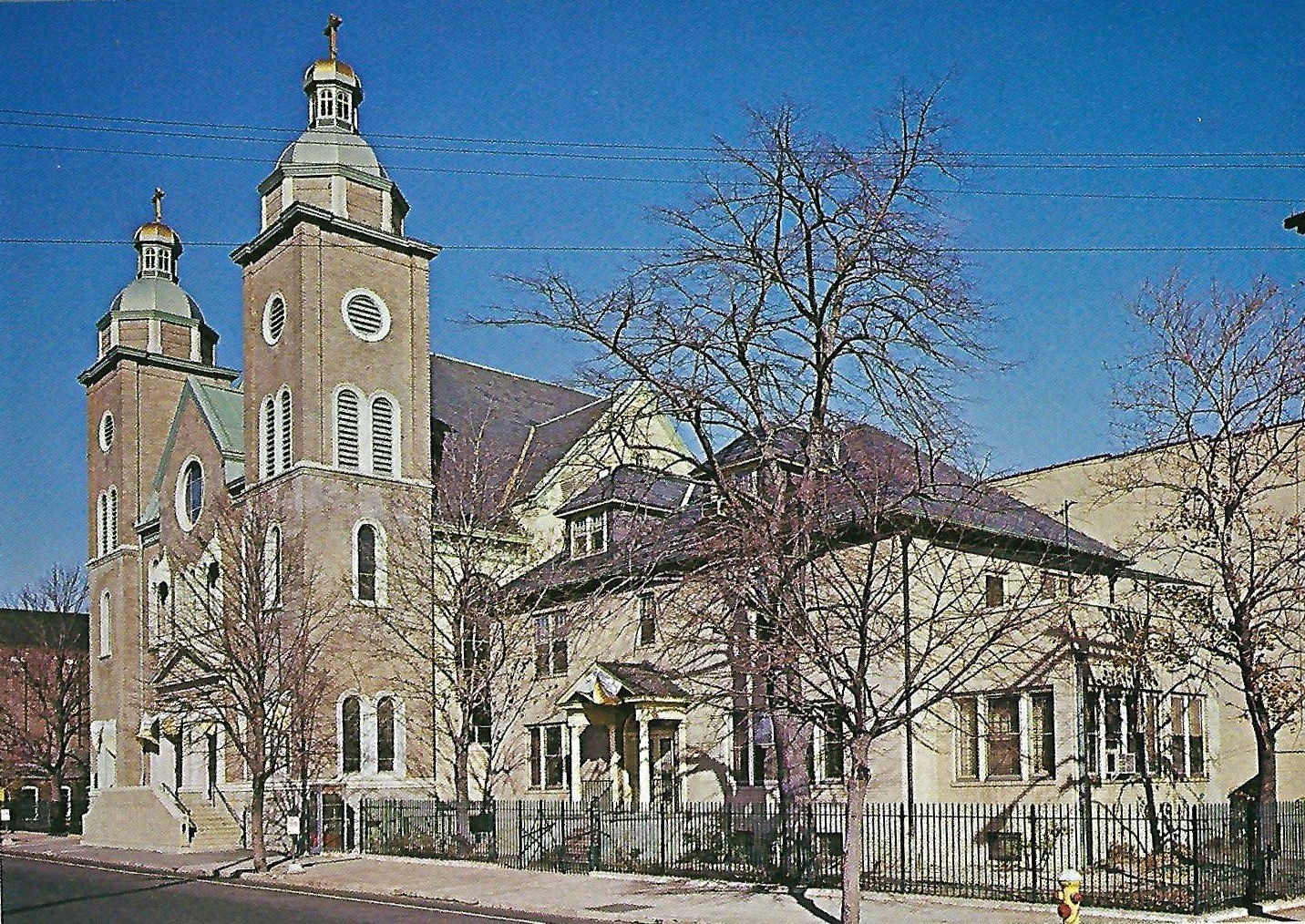
St. Michael the Archangel Byzantine Catholic Church was built in 1902, in a Baroque style, reminiscent of important urban churches in the European homeland of the Rusyn and Slovak emigrants from the Austro-Hungarian Empire who built this church. Of the three original tall and slender towers, one was removed and two were lowered because of structural concerns. St. Michael’s Cathedral has five bells (the largest is six feet in diameter and weighs nearly two tons) which can be heard around the city. As is our tradition, they are named after saints: Andrew, Nicholas, Michael, Nikifor, and Daniel.
The interior design of the church is based on the floorplan of the Temple in Jerusalem (1 Kings, 6-8), which itself is based on the portable Tabernacle (Exodus, 25-26) where Israel worshipped for forty years during the desert wanderings. The interior of the church is divided into a vestibule or outer court, the nave or inner court, and the Holy Place or sanctuary. This Old Testament pattern has been reinterpreted in light of Jesus Christ, Who reveals the Invisible God (John 1:18) and Whose perfect sacrifice on the Cross atones for all human sin and for all (Hebrews 9:11-12).
The earliest existing Christian worship spaces were decorated with images of biblical events and even of Jesus and Mary. The Church recognizes that the commandment against “graven images” (Exodus 20:6) is not broken by our holy icons because: 1) Jesus Christ is the “image of the invisible God” (Colossians 1:15), Whose human nature can indeed be depicted; and 2) the holy icons merely express in form and color what the Holy Scriptures express in verbal images. We do not worship these images but give honor to the divine and holy persons they depict. Our Byzantine tradition further avoids the semblance of idolatry by excluding statues entirely.
Vestibule/Outer court:
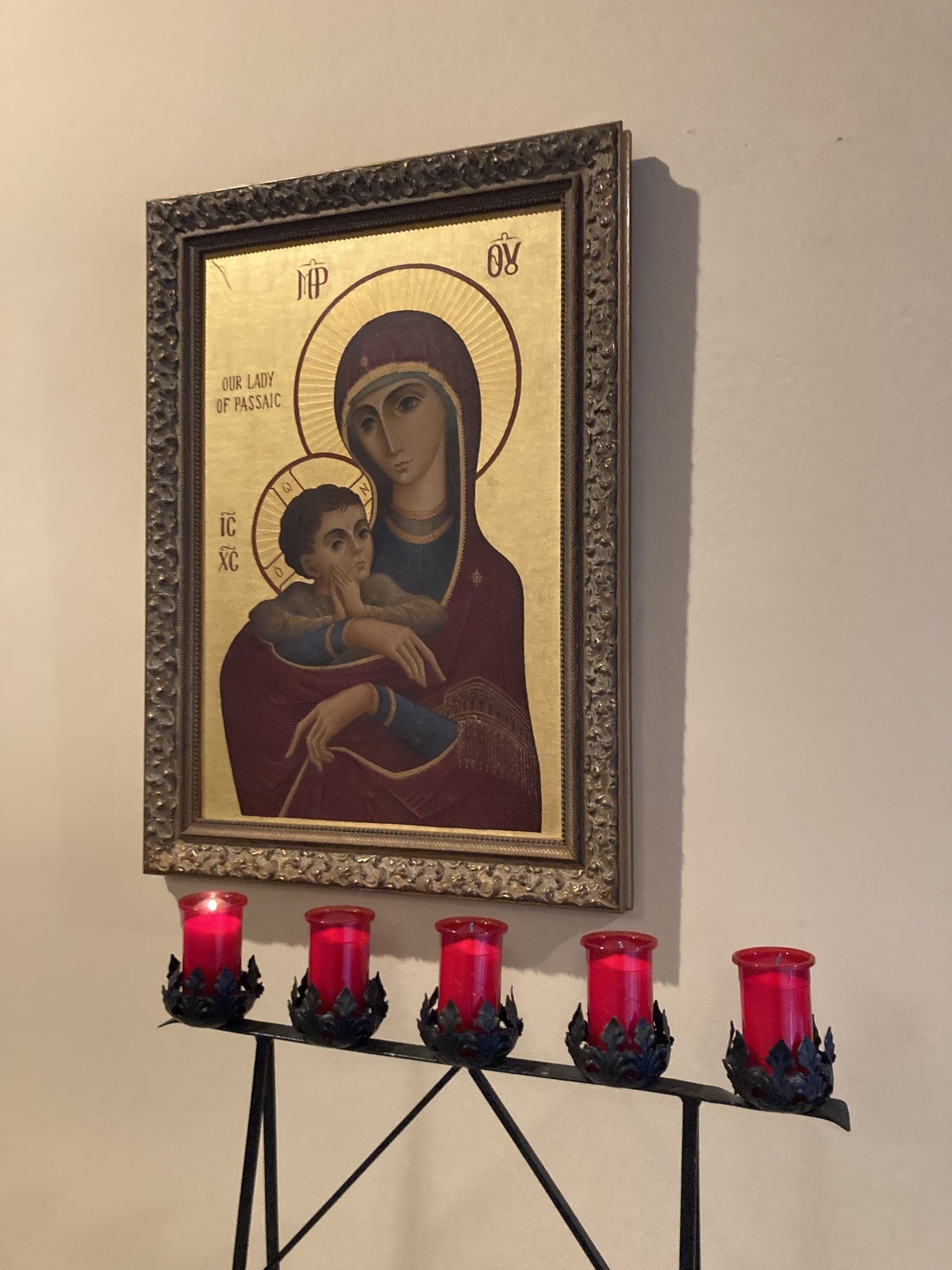
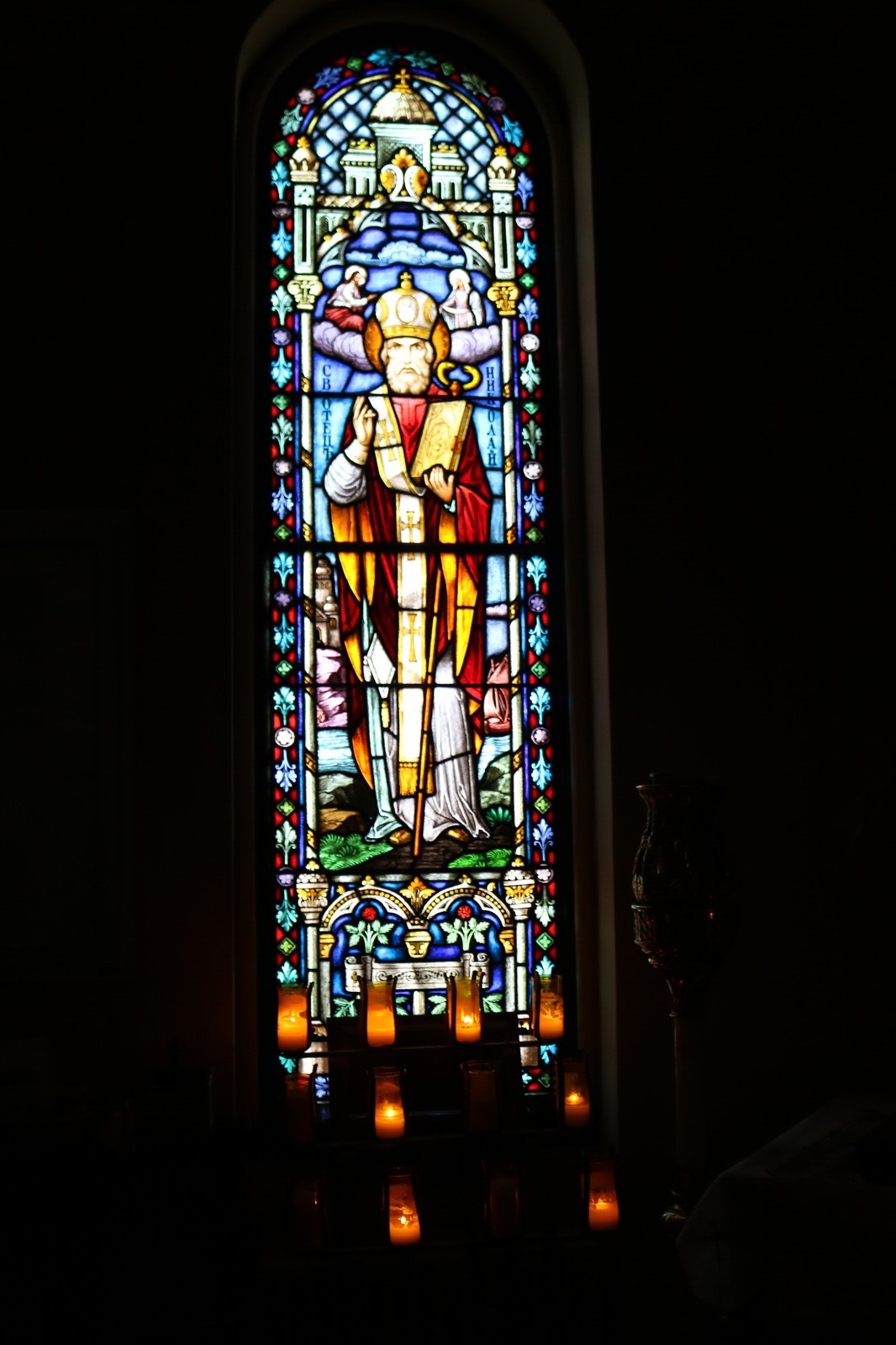
As the faithful enter the church, they find themselves in the vestibule. Flanked on each side by stain glass windows depicting St. Nicholas of Myra (on the left) and St. Joseph (on the right), is an icon of “Our Lady of Passaic,” commissioned for the Cathedral’s hundredth anniversary (1990).

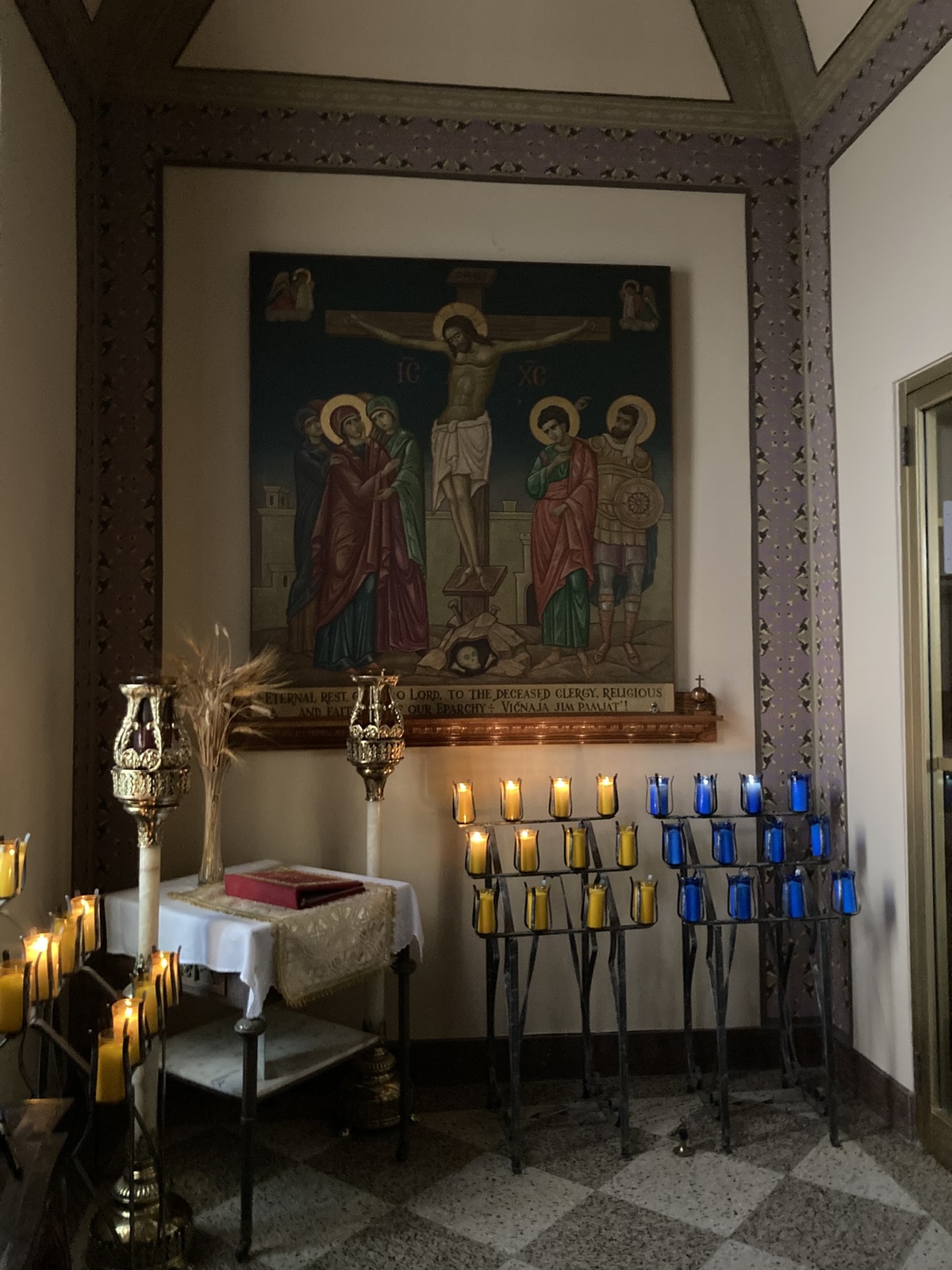
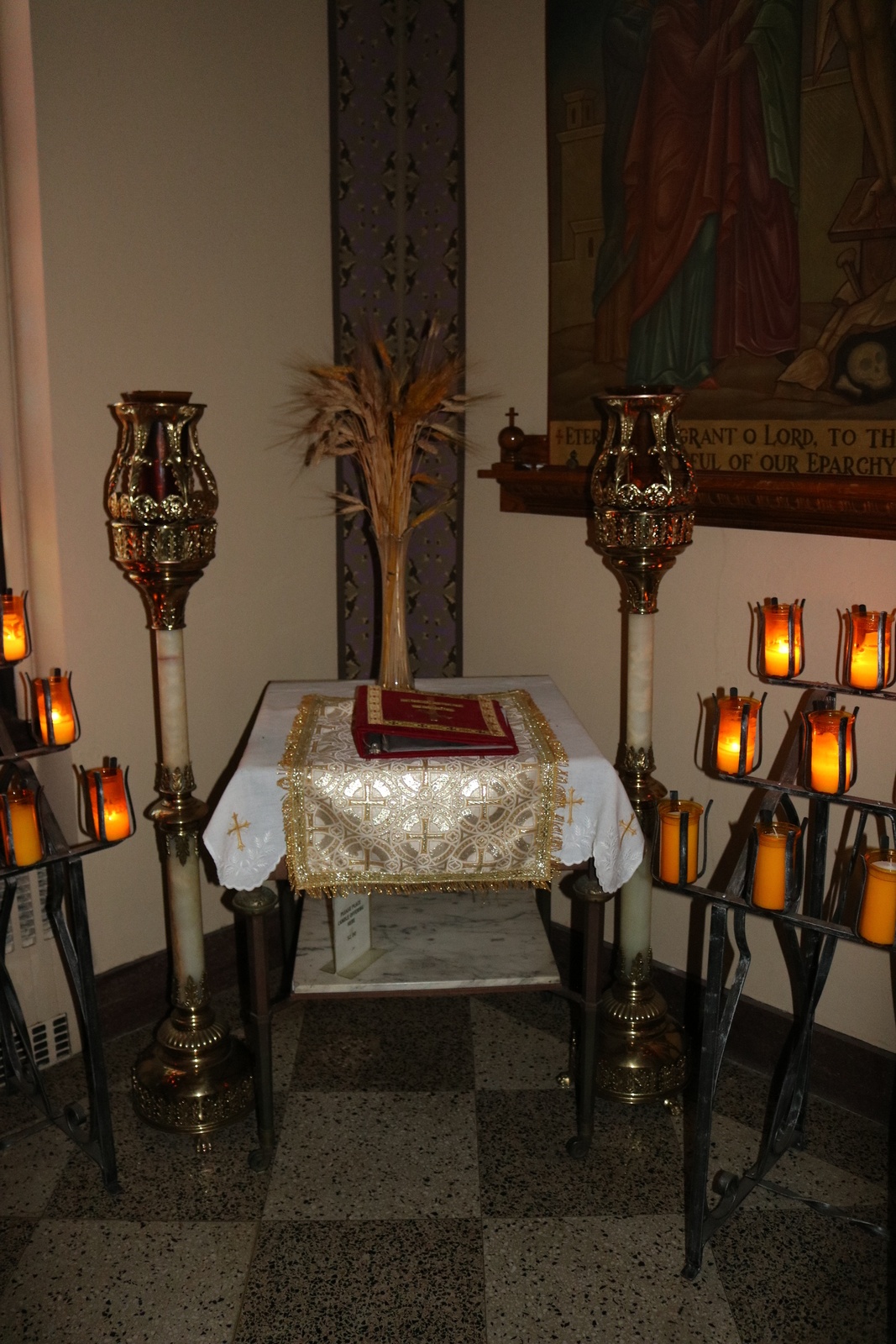
On the north wall of the vestibule (on the left side entering the church), an icon of Jesus’ Crucifixion commemorates the faithful departed. Here are enshrined the parish’s Hramoty, lists of departed family and friends who are remembered by name on the five annual “All Souls’ Saturdays.” In this room faithful can light candles as physical reminders of their prayers.
Nave/Inner court:
Leaving behind the vestibule, the faithful enter the nave and find themselves surrounded by icons on all sides.
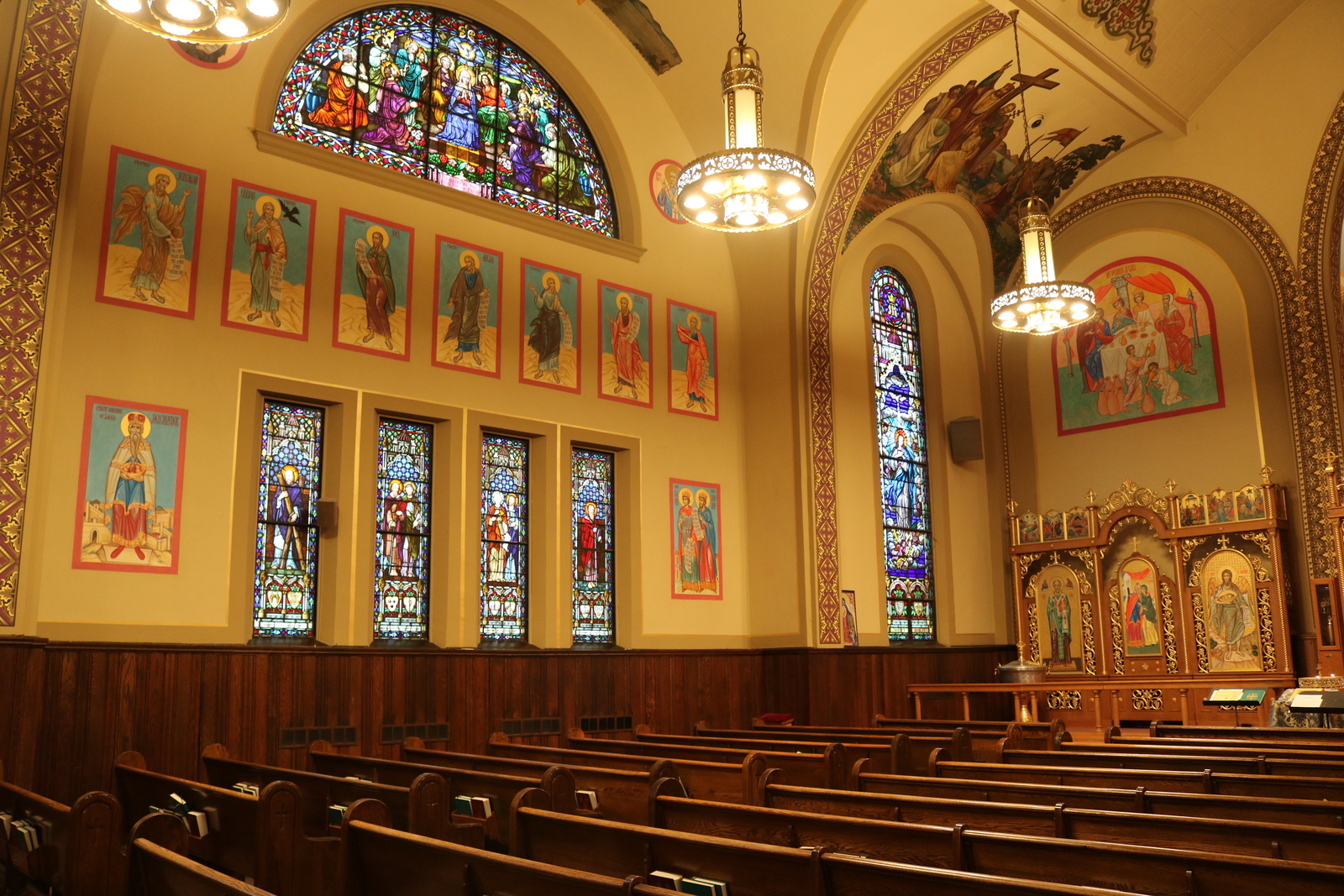
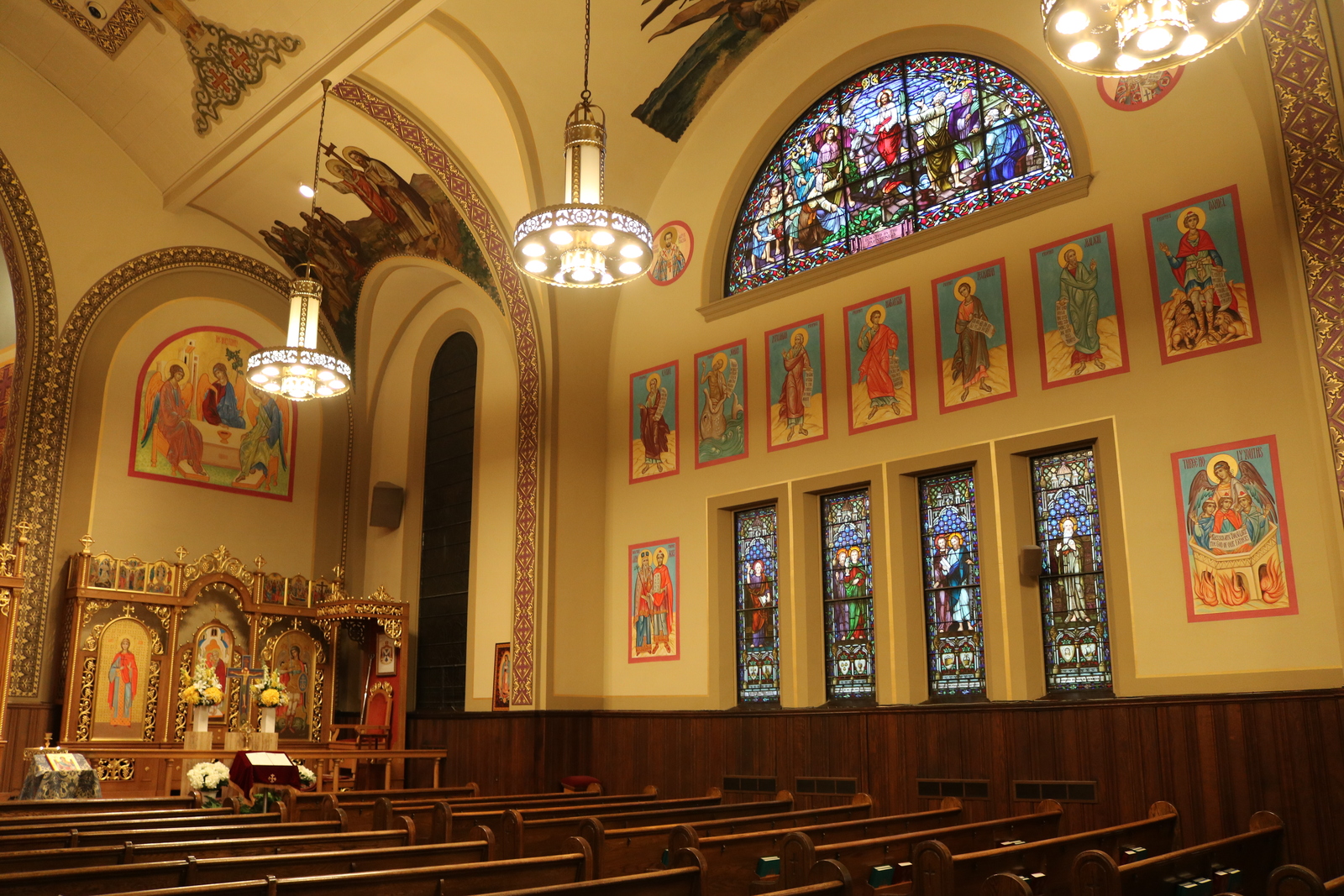
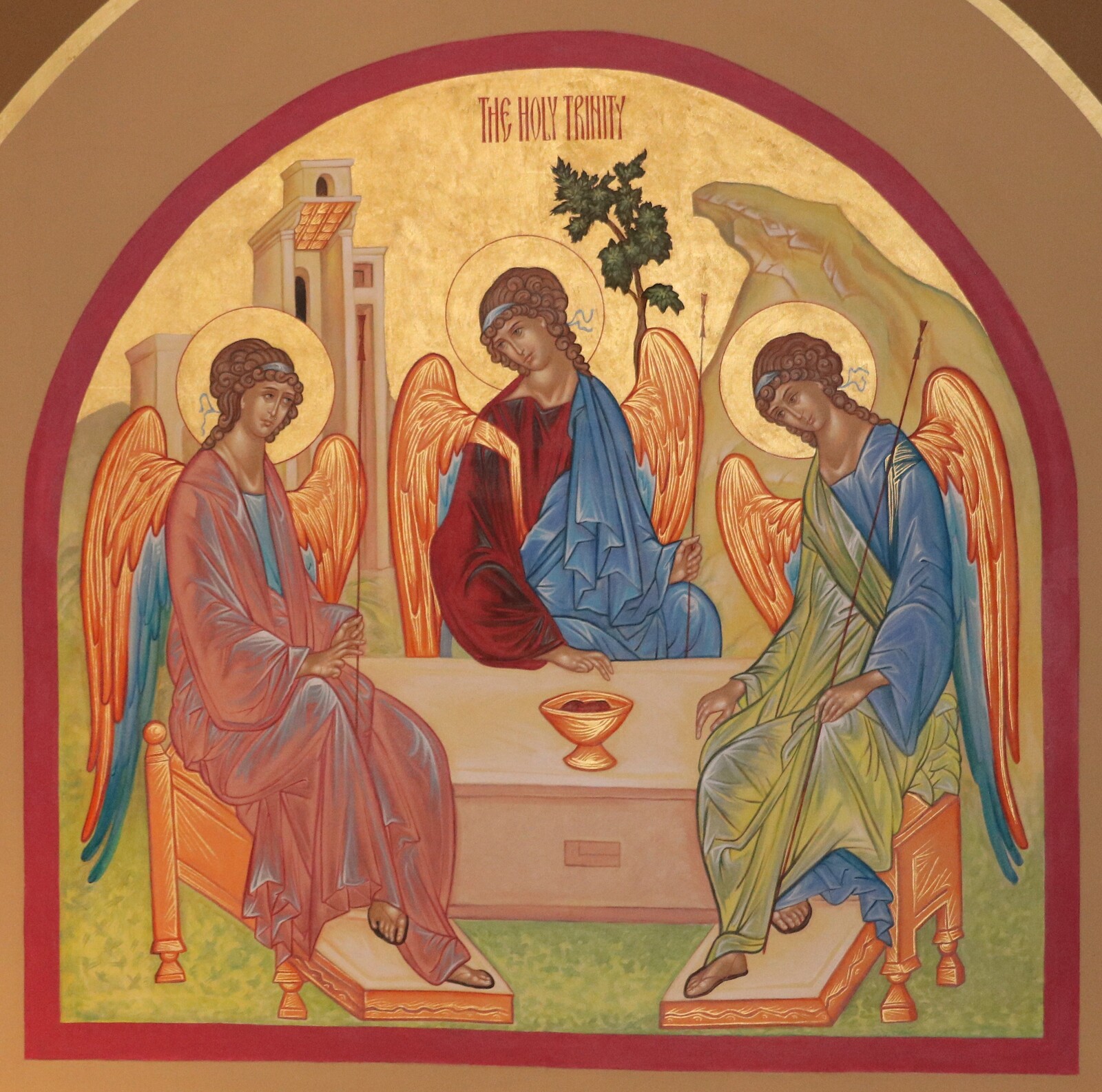
On the north east wall, a large icon depicts Jesus’ miracle at the Wedding at Cana (John 2:1-12). On the opposite wall is the icon of the Holy Trinity (after Andrei Rublëv’s based on Genesis, 18). Together with the icon of the Mystical Supper above the Royal Doors, these icons show us how Jesus is God with us inviting us to participate more and more in His banquet until we will be one in the Trinity at the Eternal Banquet.

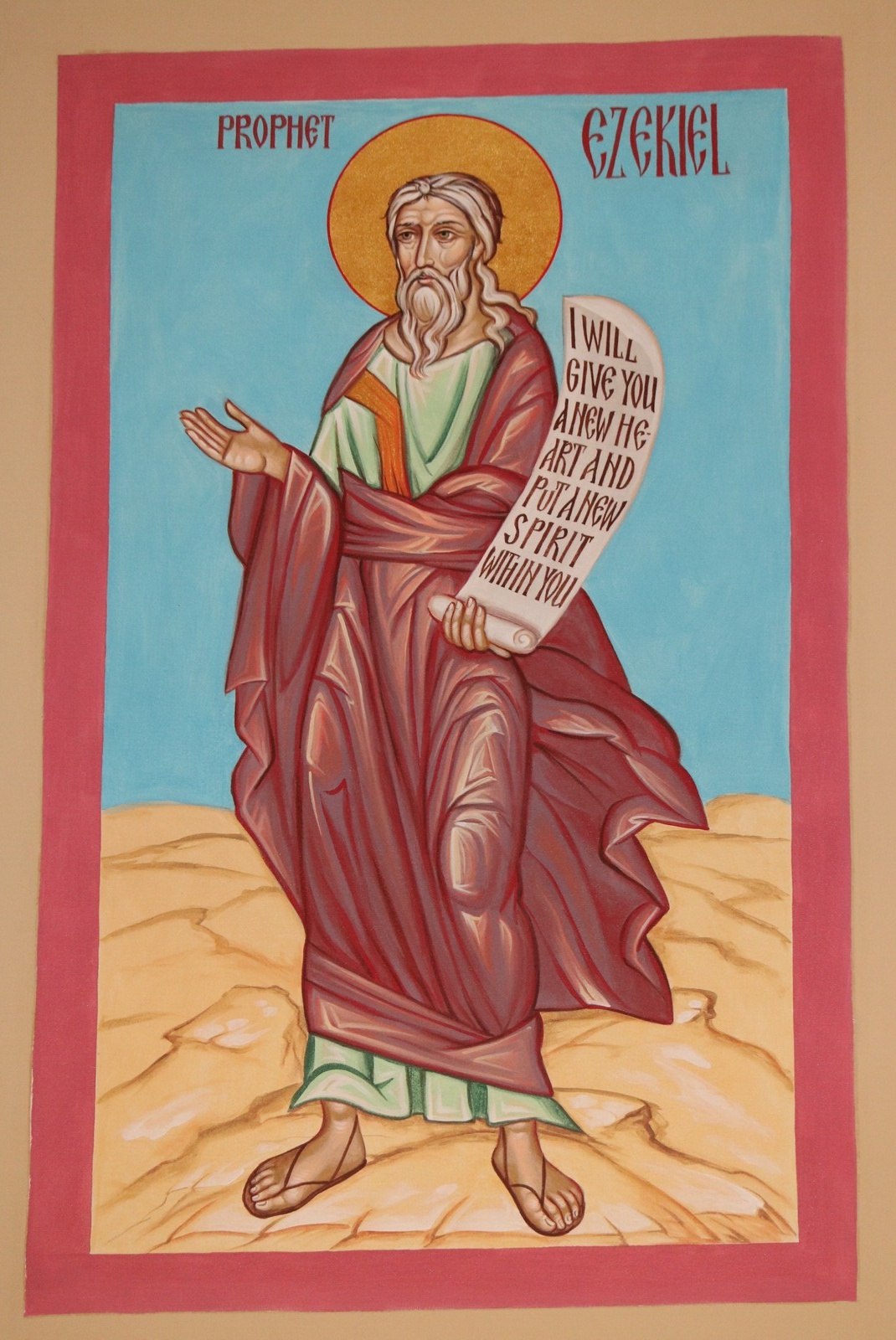
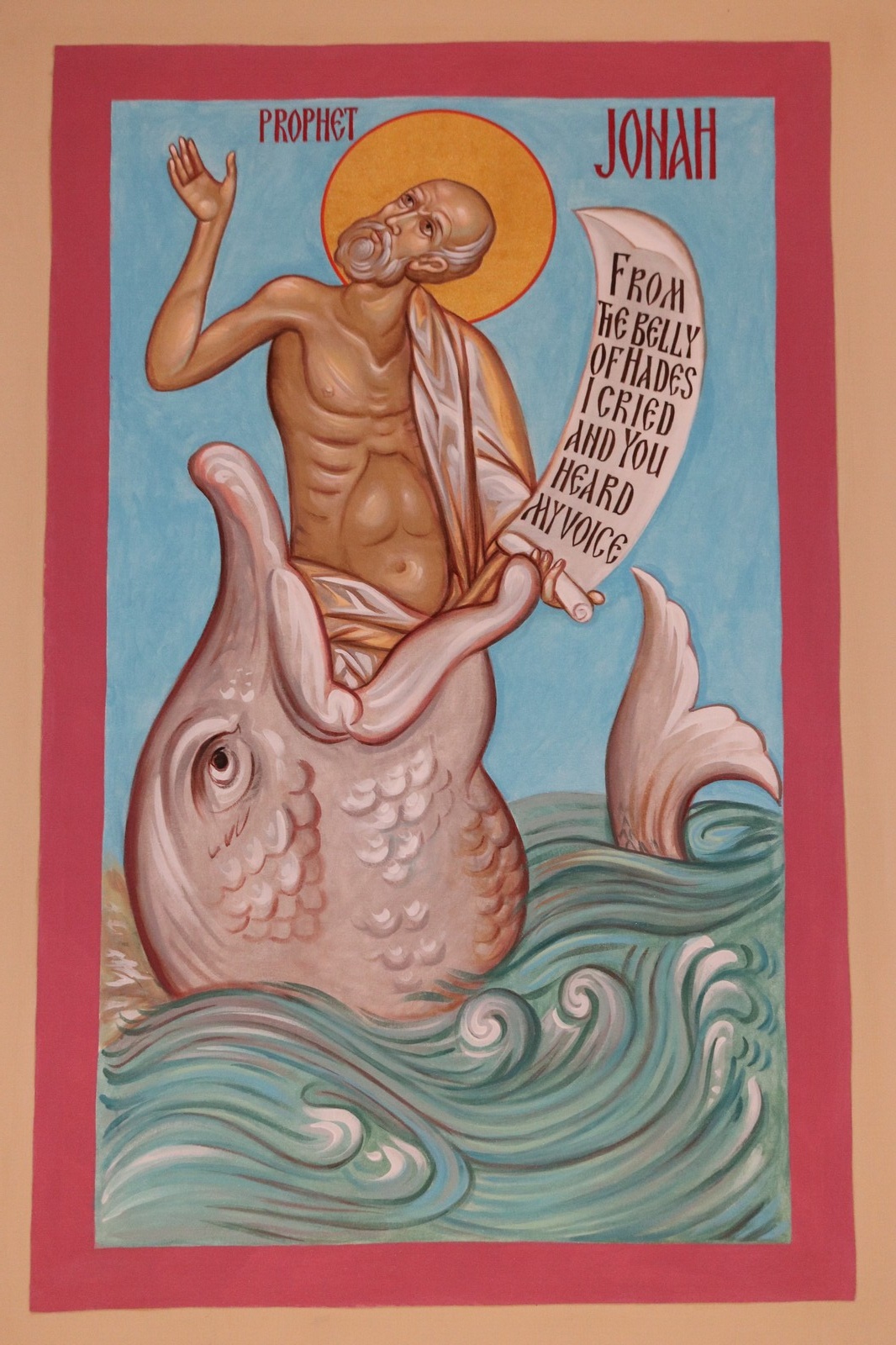
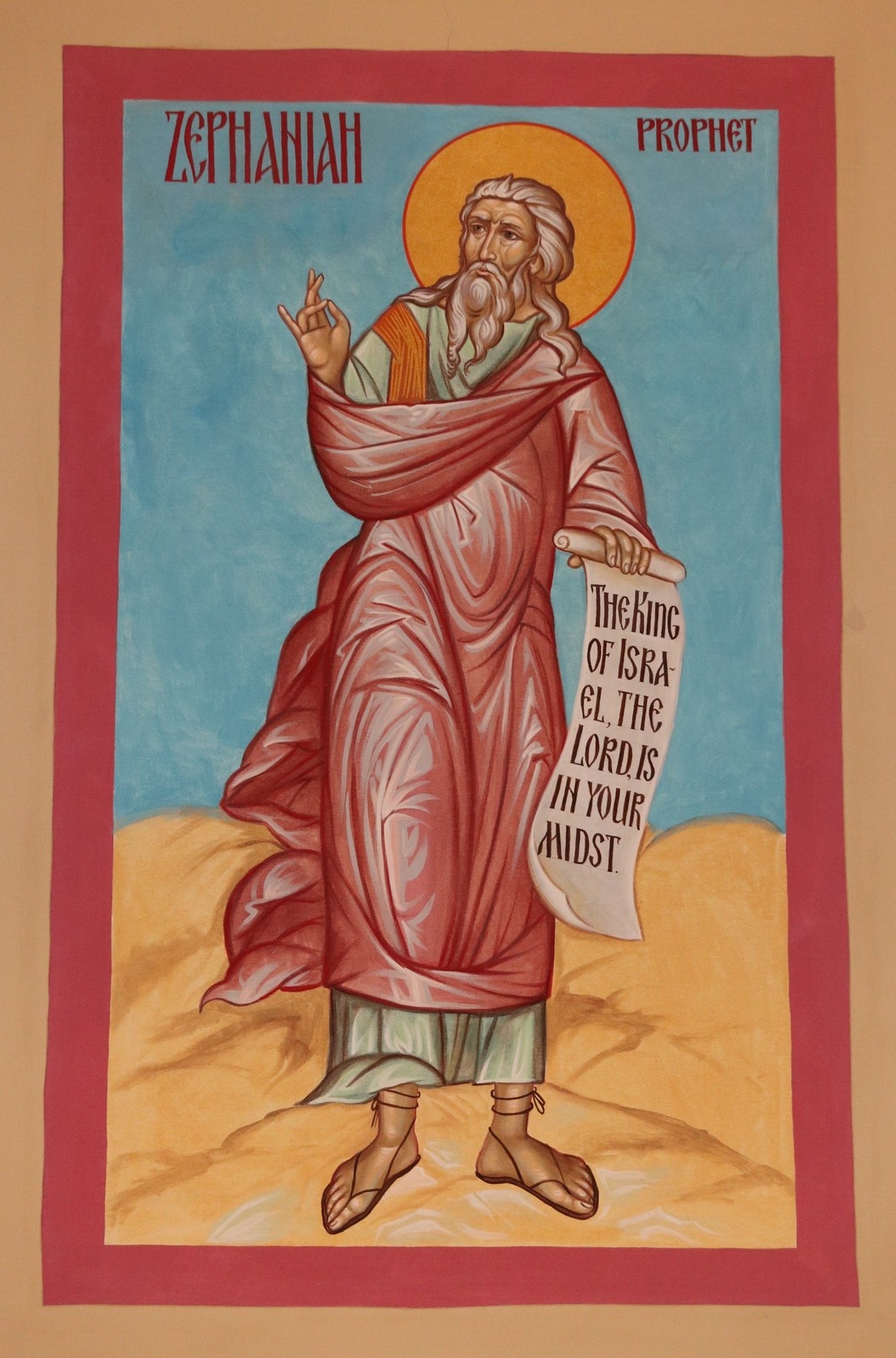
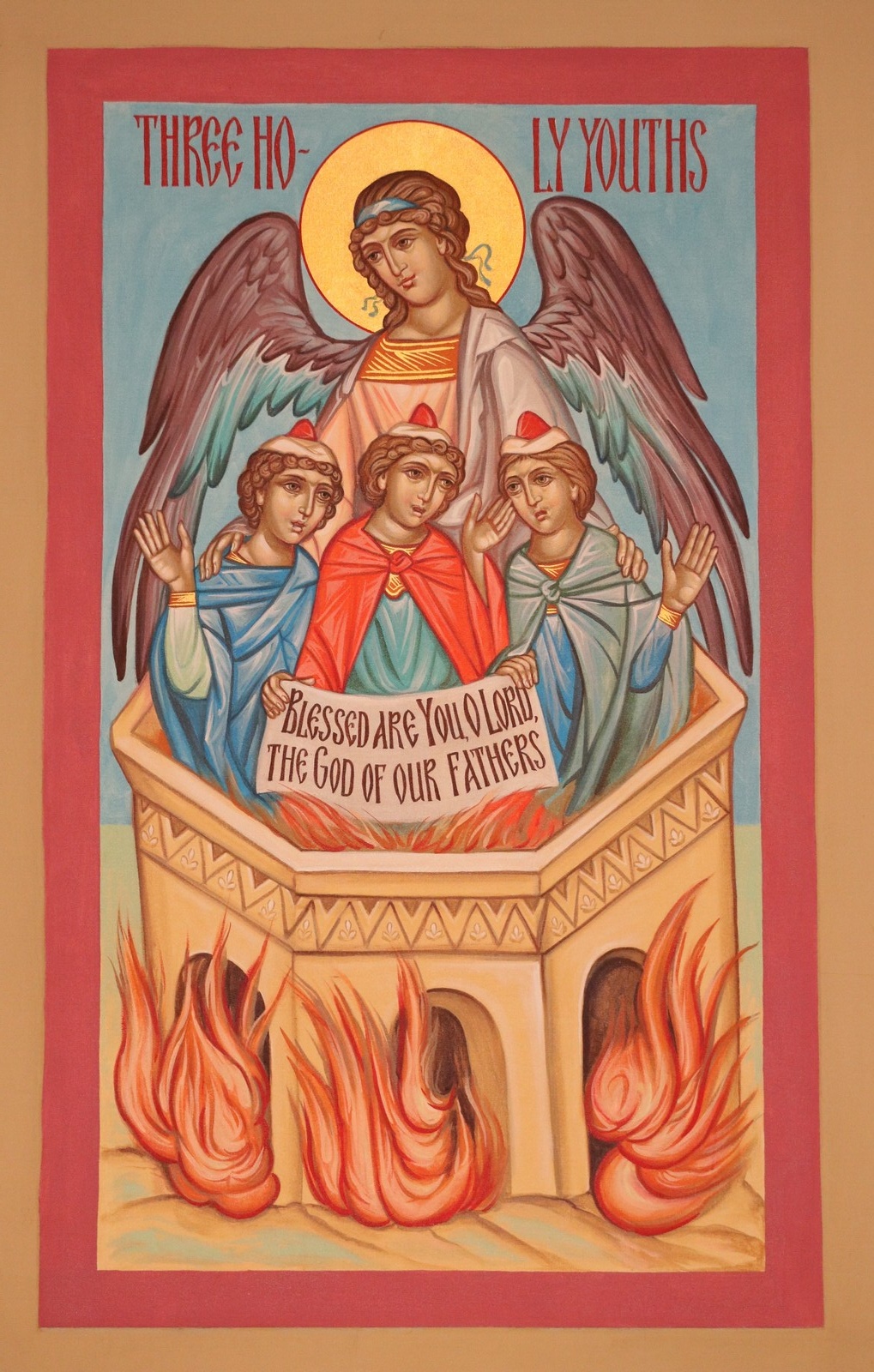
Old Testament prophets are depicted on the south and north walls. On the south (left to right or east to west) are: Ezekiel, Jonah, Zephaniah, Habakkuk, Zechariah, Malachi, Daniel, with Moses and Aaron and the Three Youths flanking the windows depicting the Apostles.
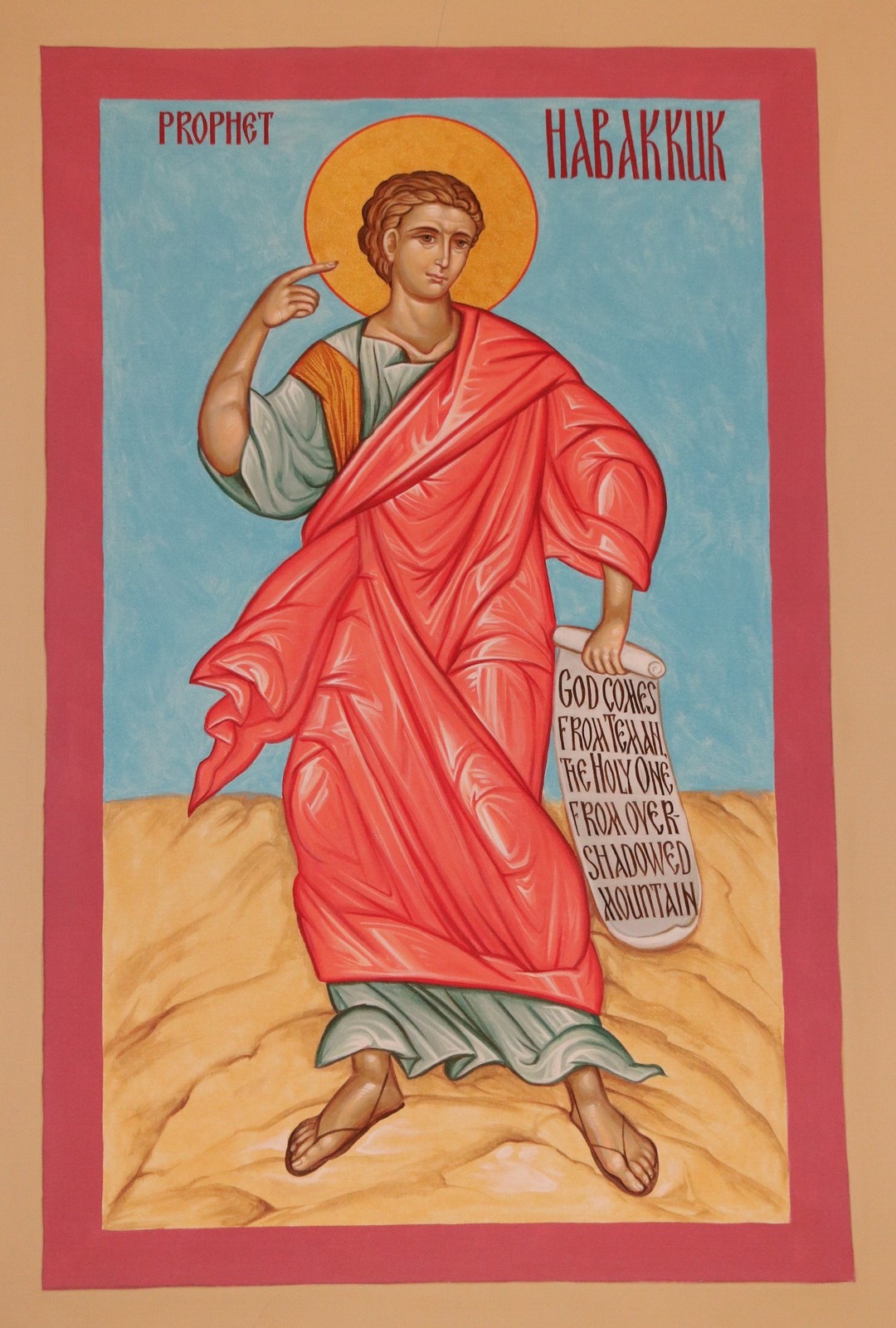
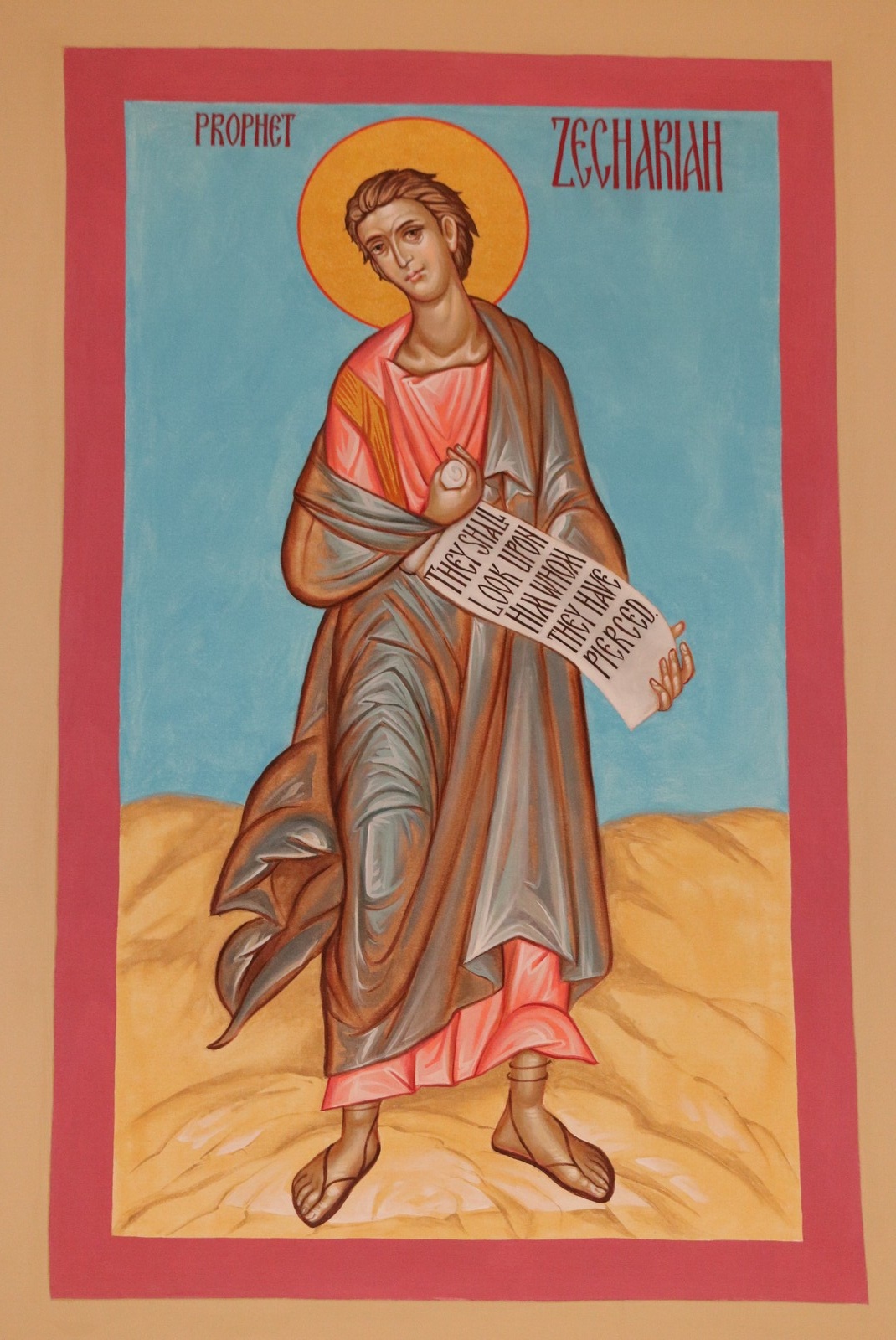

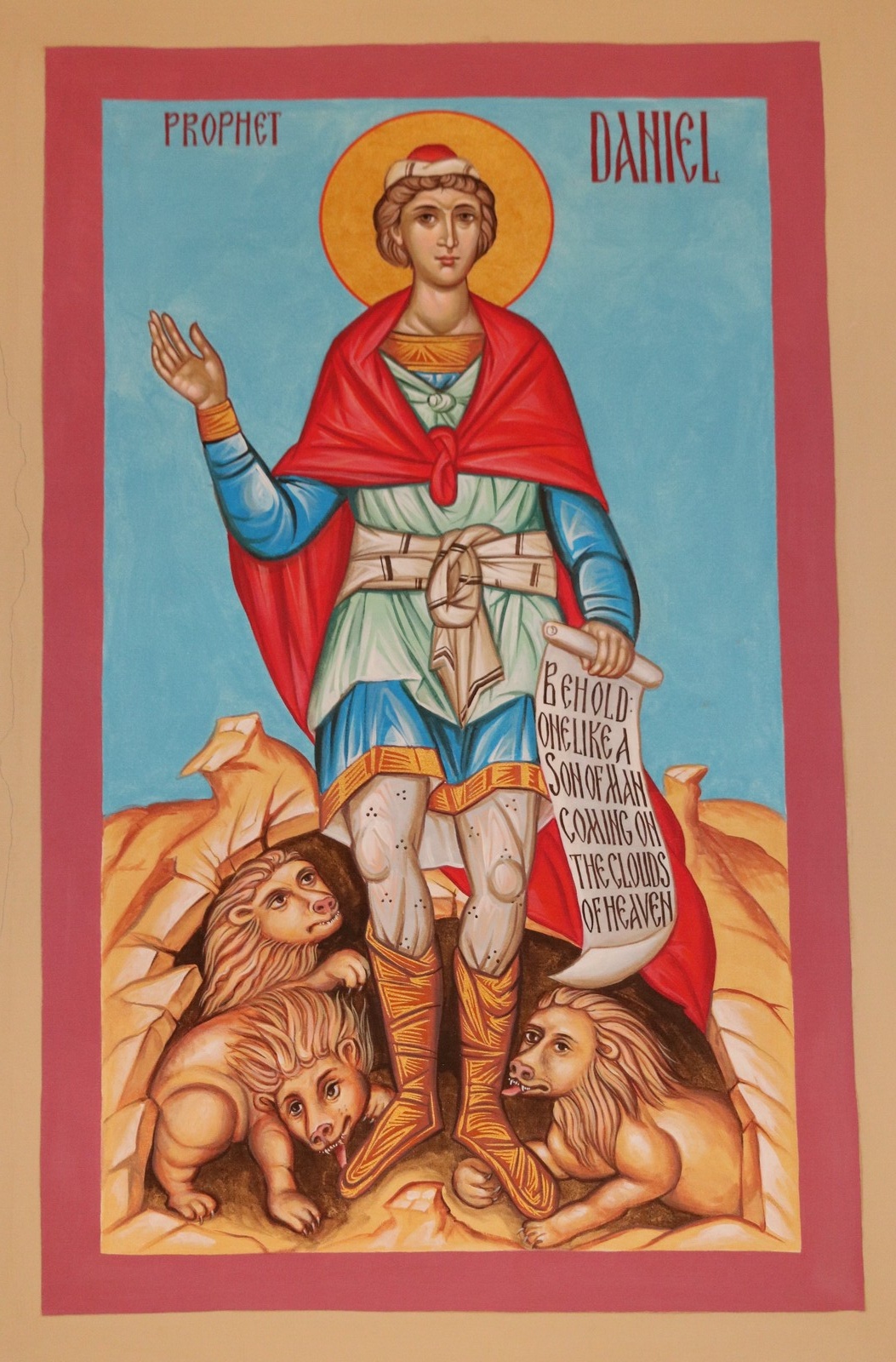
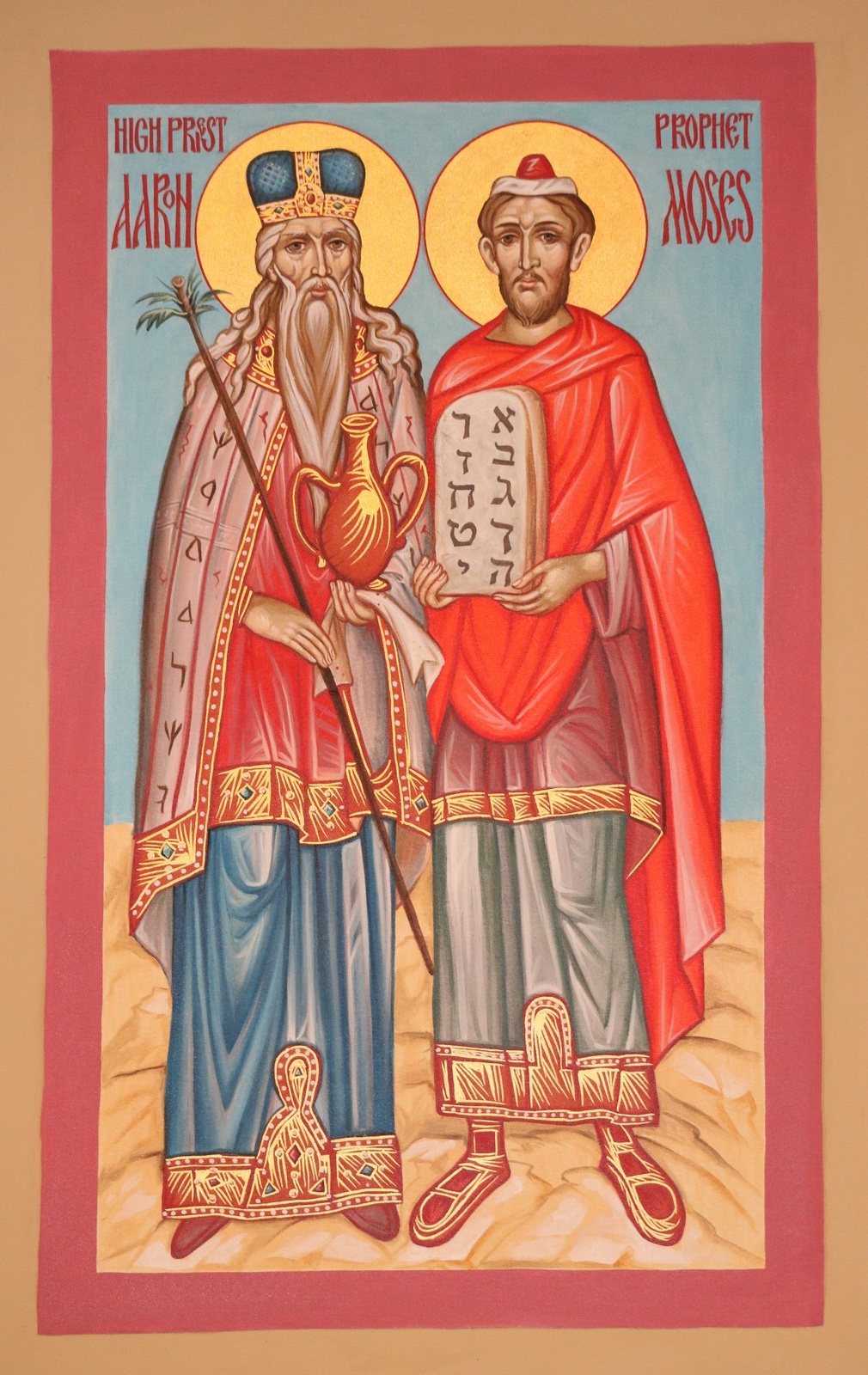
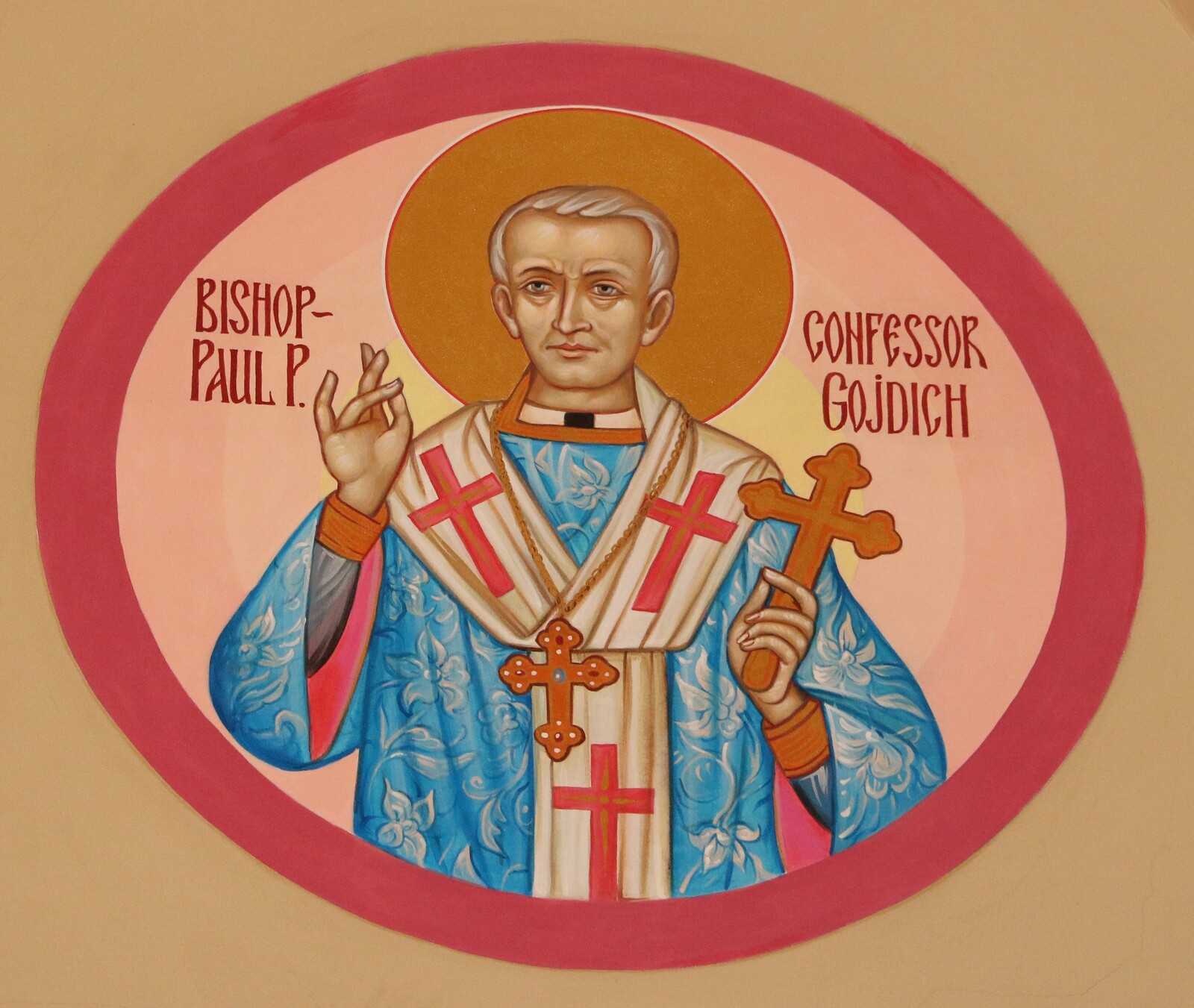
Ruthenian Saints are depicted in roundels flanking stained glass windows above the prophets: Bishop Paul Gojdič and Bayonne native Sr. Miriam Teresa Demjanovič on the north side flanking the window depicting the Descent of the Holy Spirit on Pentecost
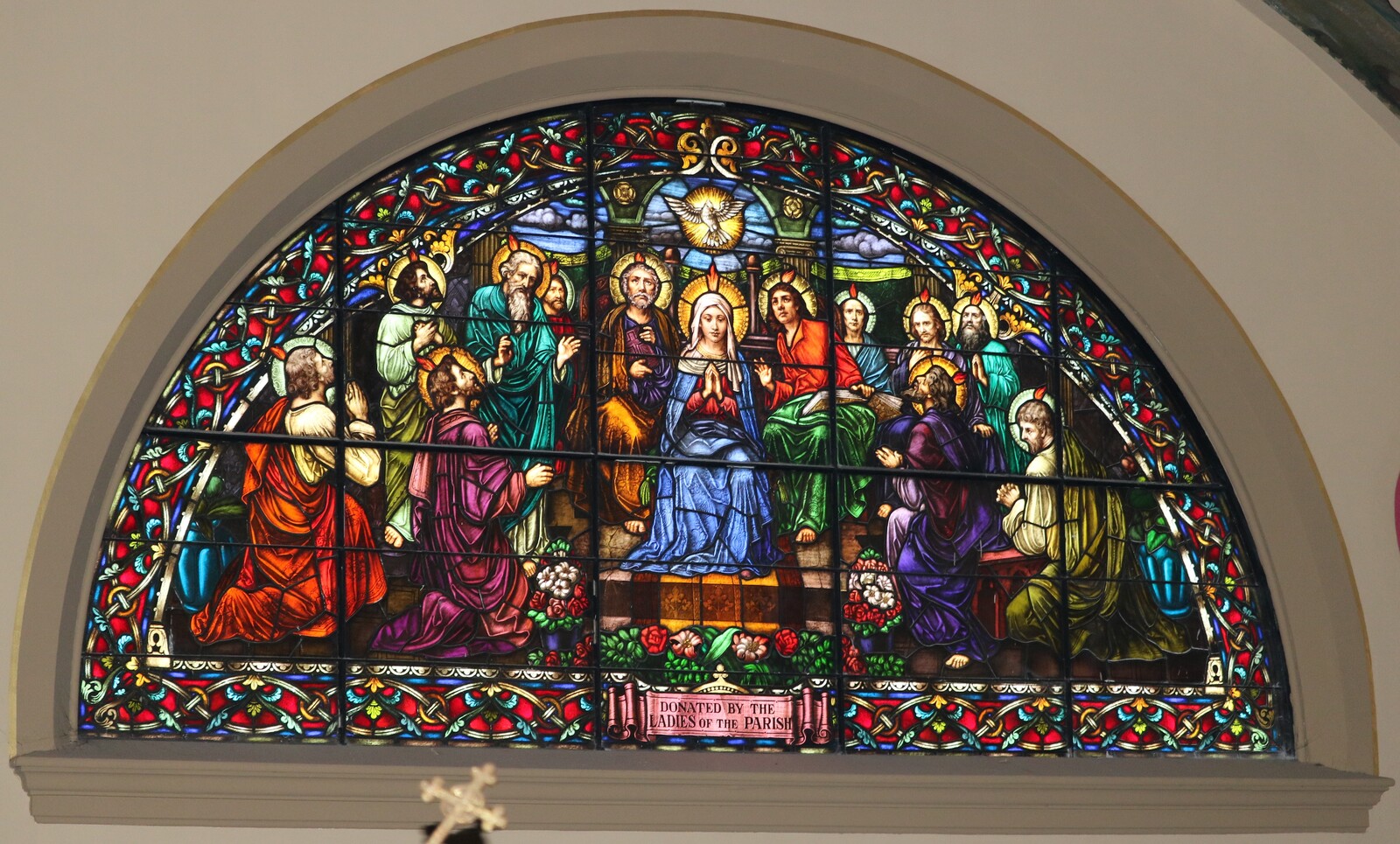

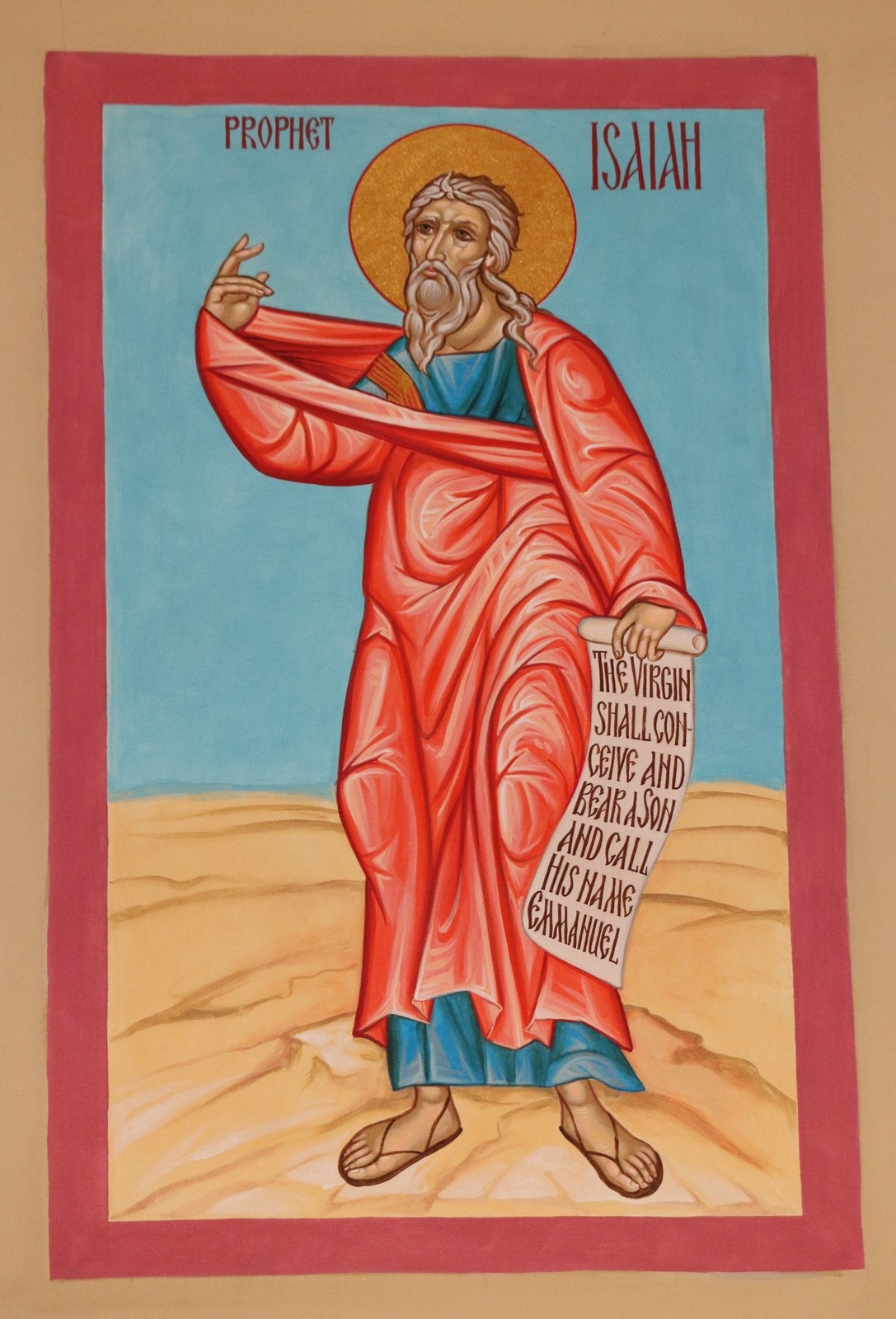
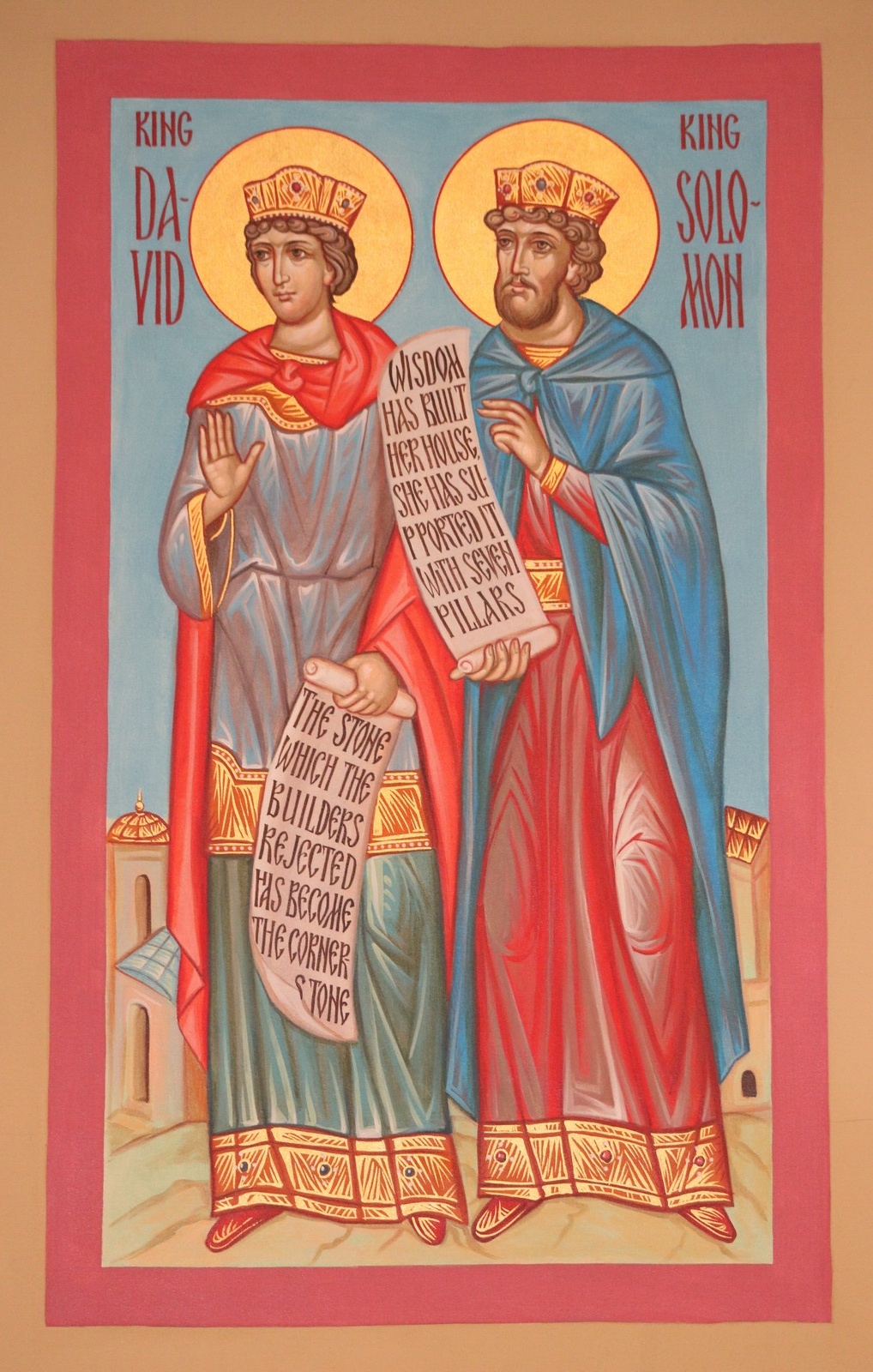
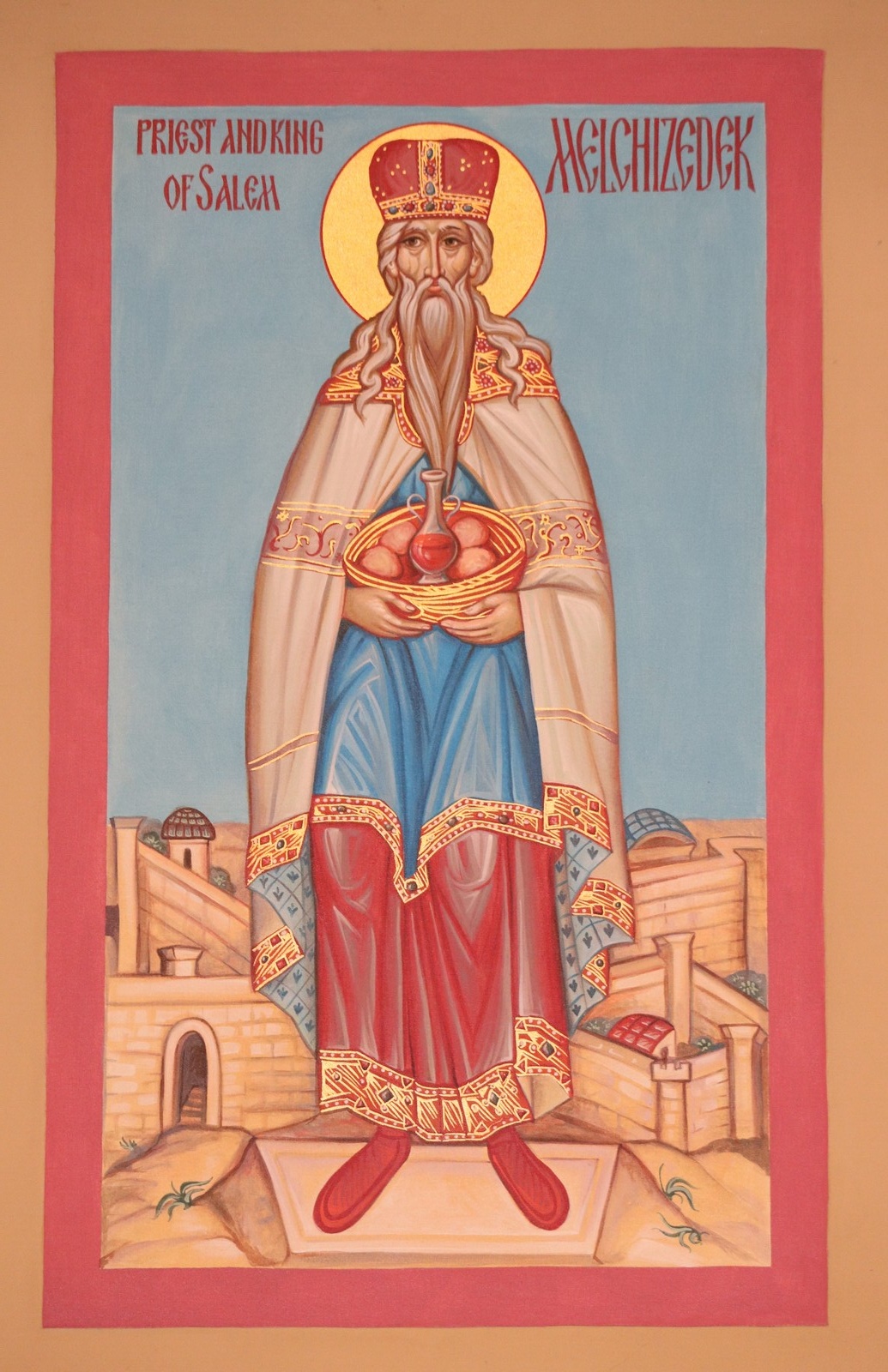
On the north (right to left or east to west) are: Isaiah, Hosea, Amos, Micah, Joel, Elijah, Jeremiah, with David and Solomon and Melchizedek flanking the windows depicting the Apostles.
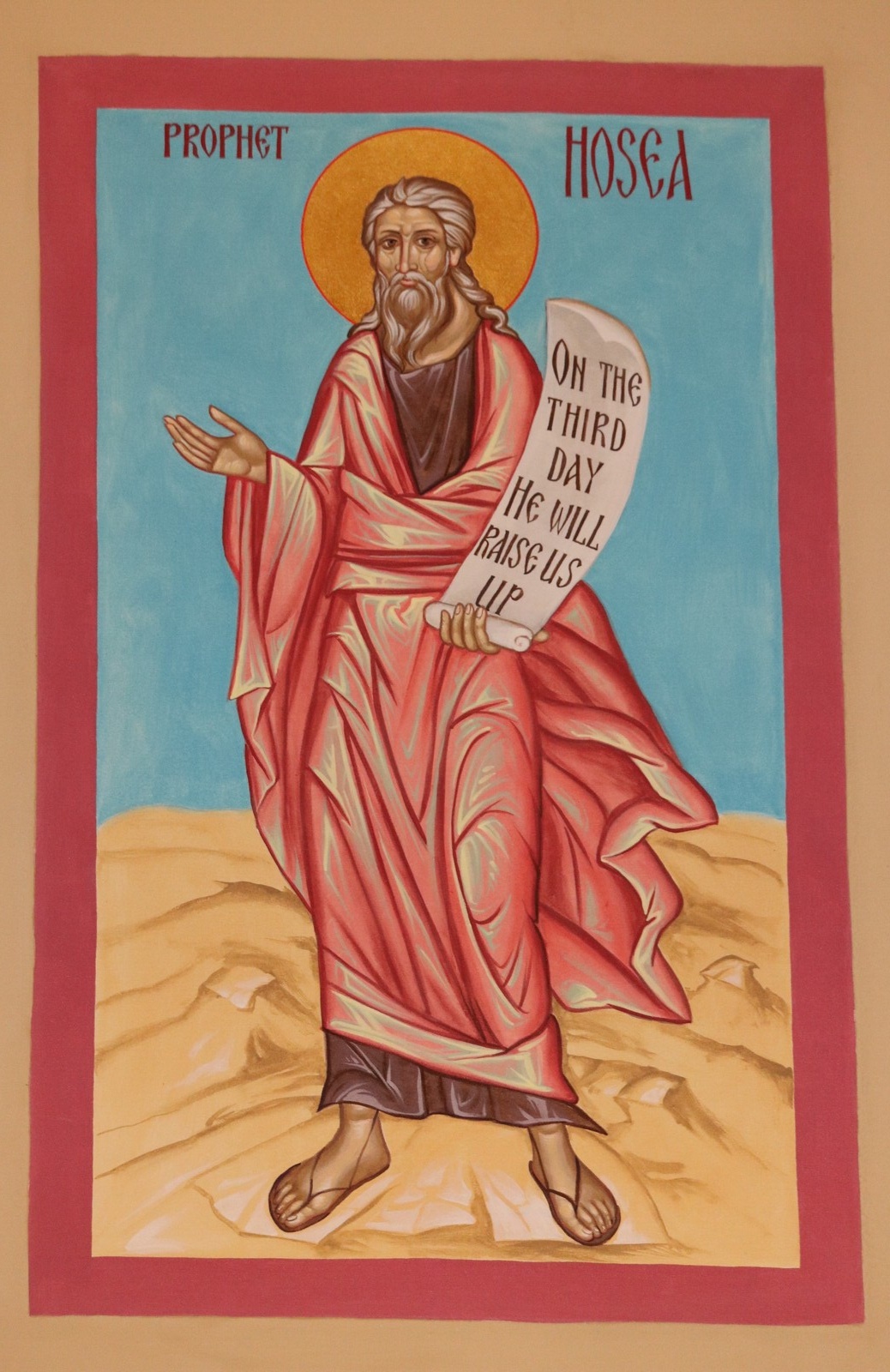


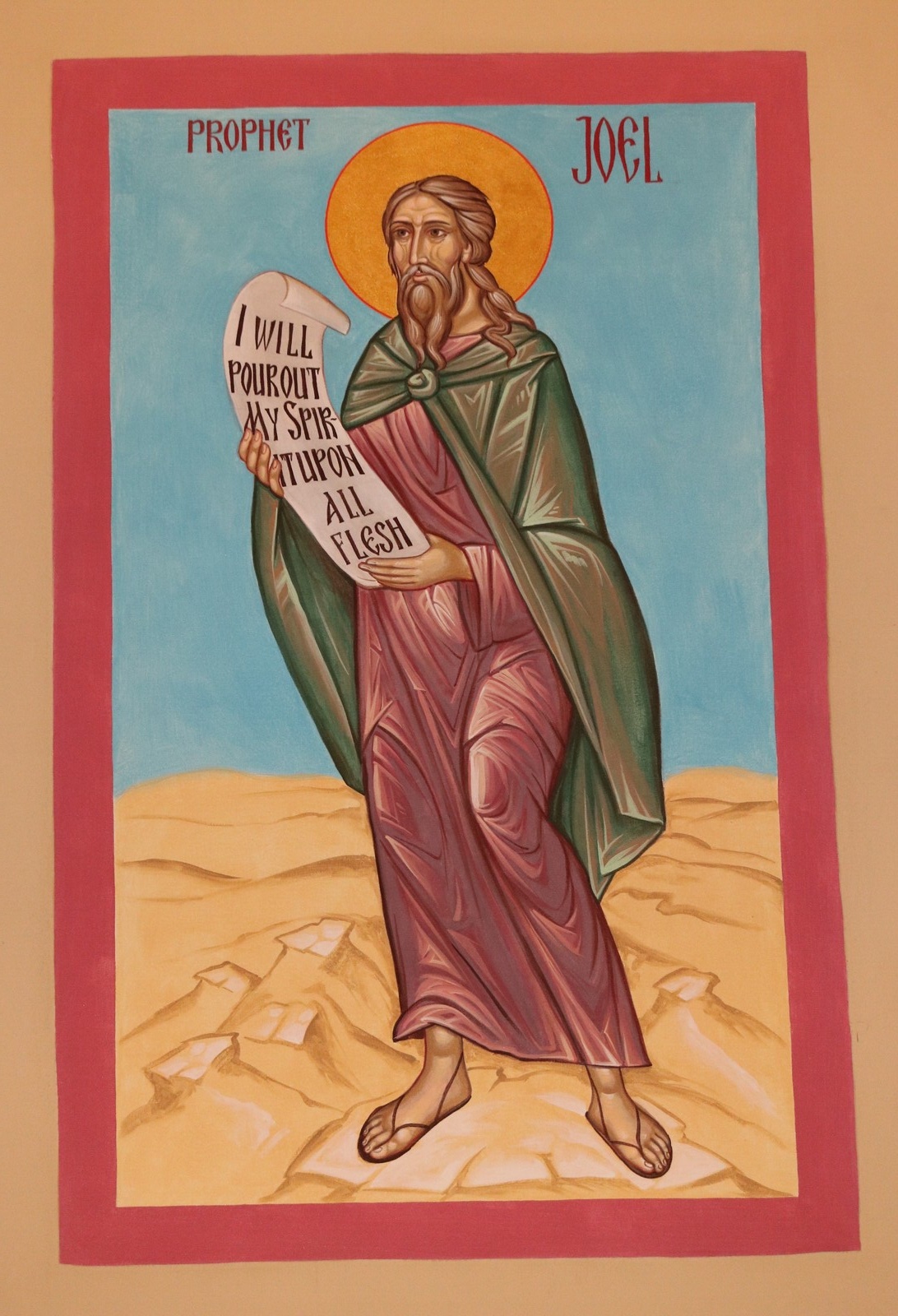
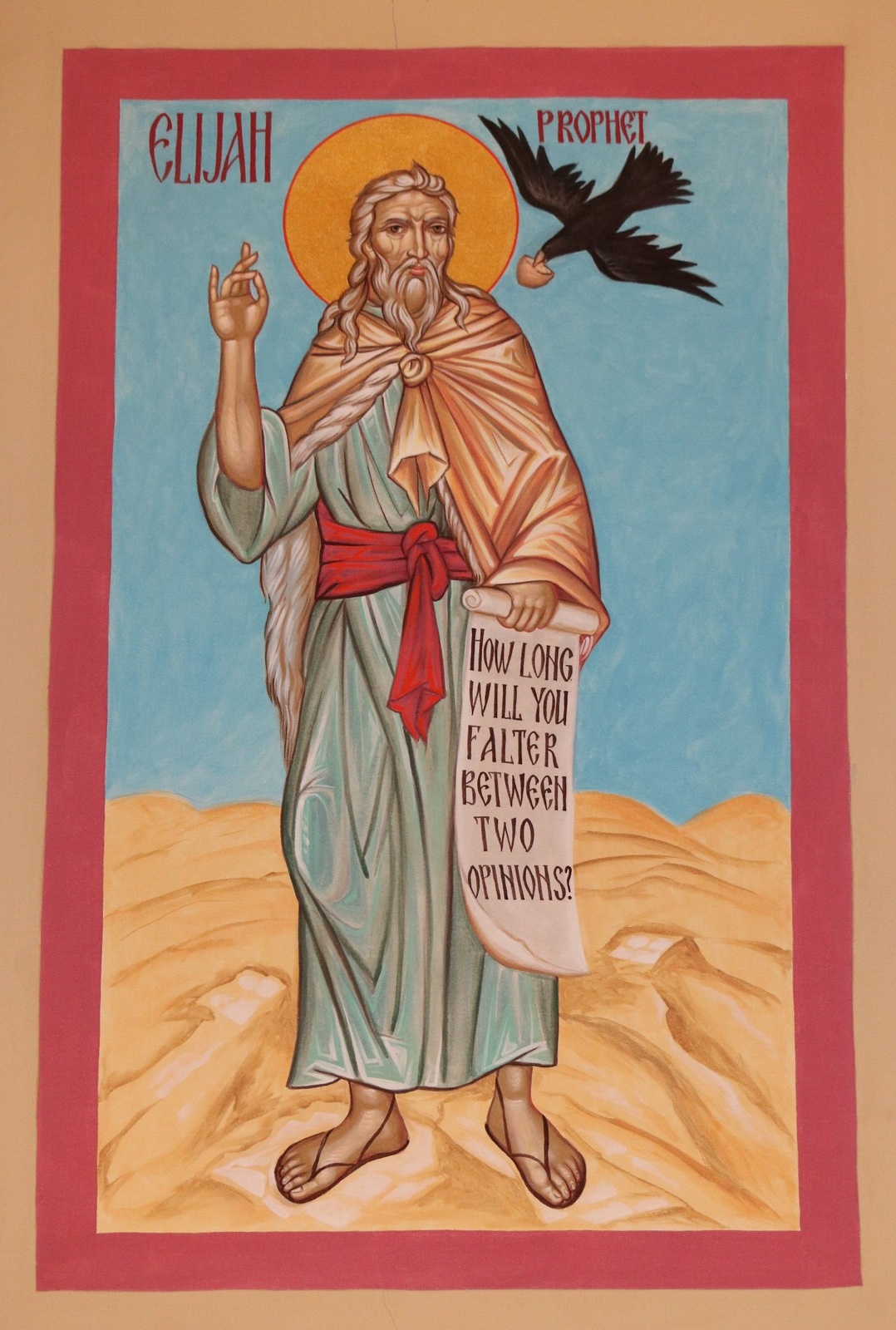
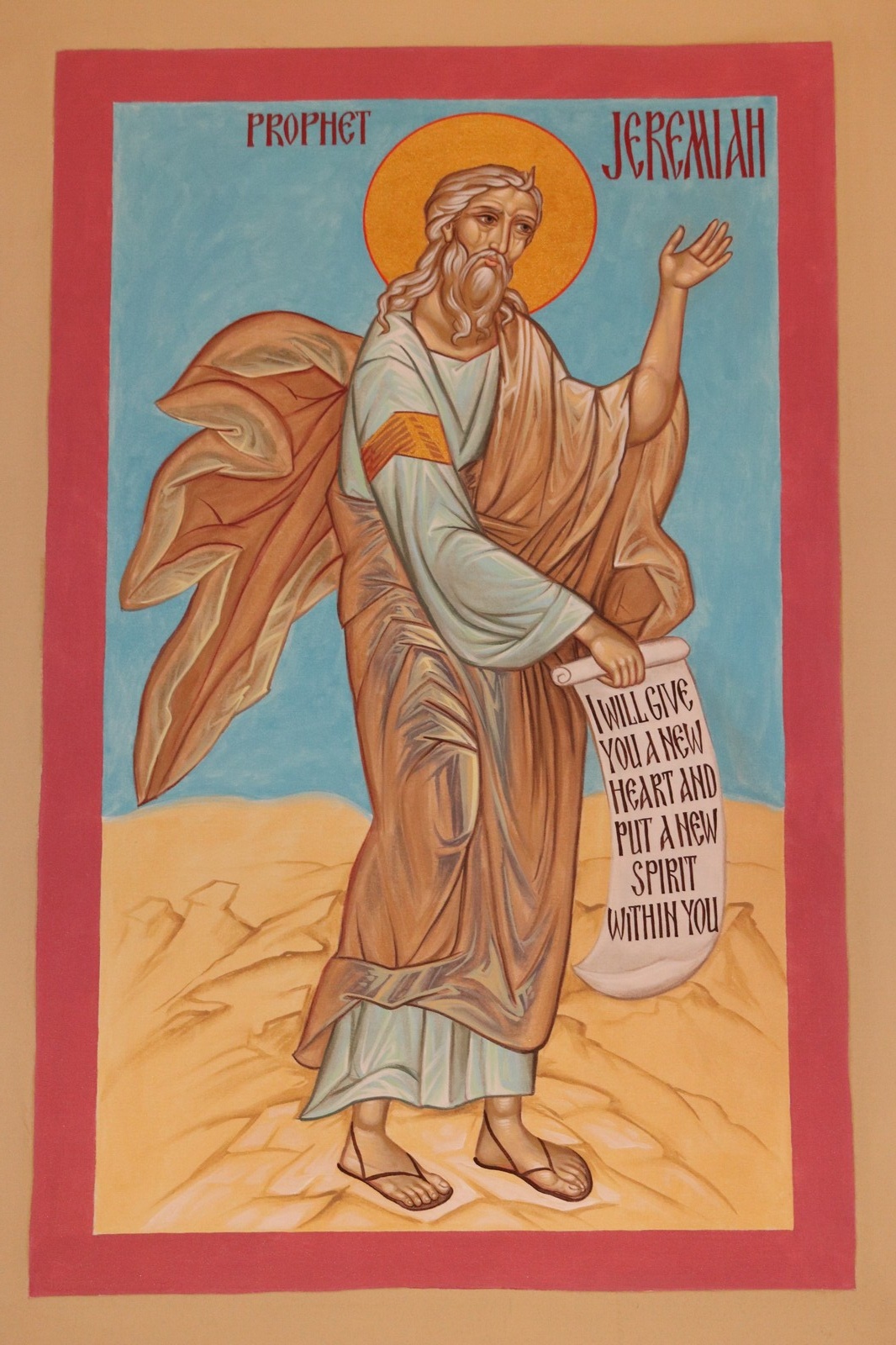
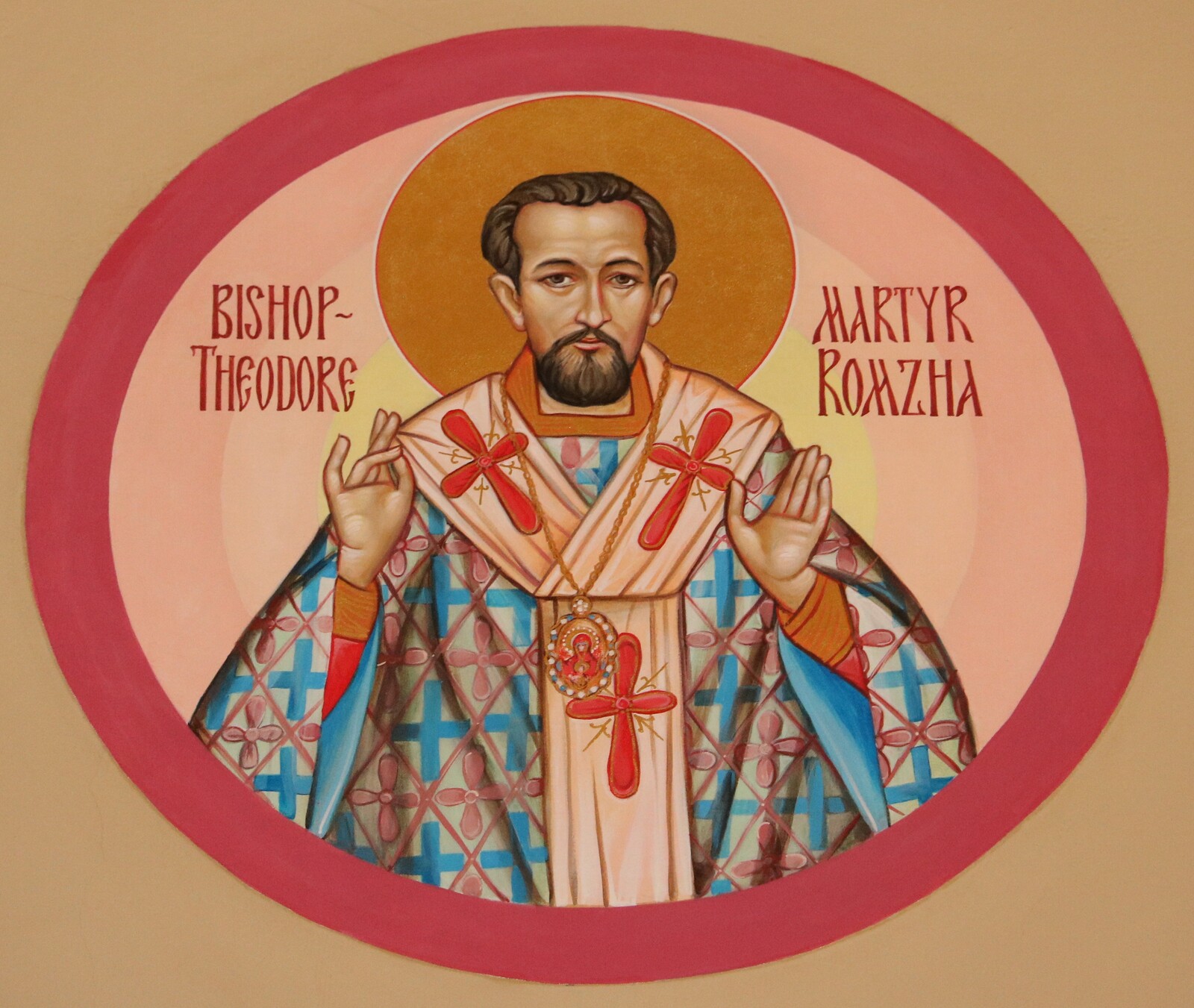
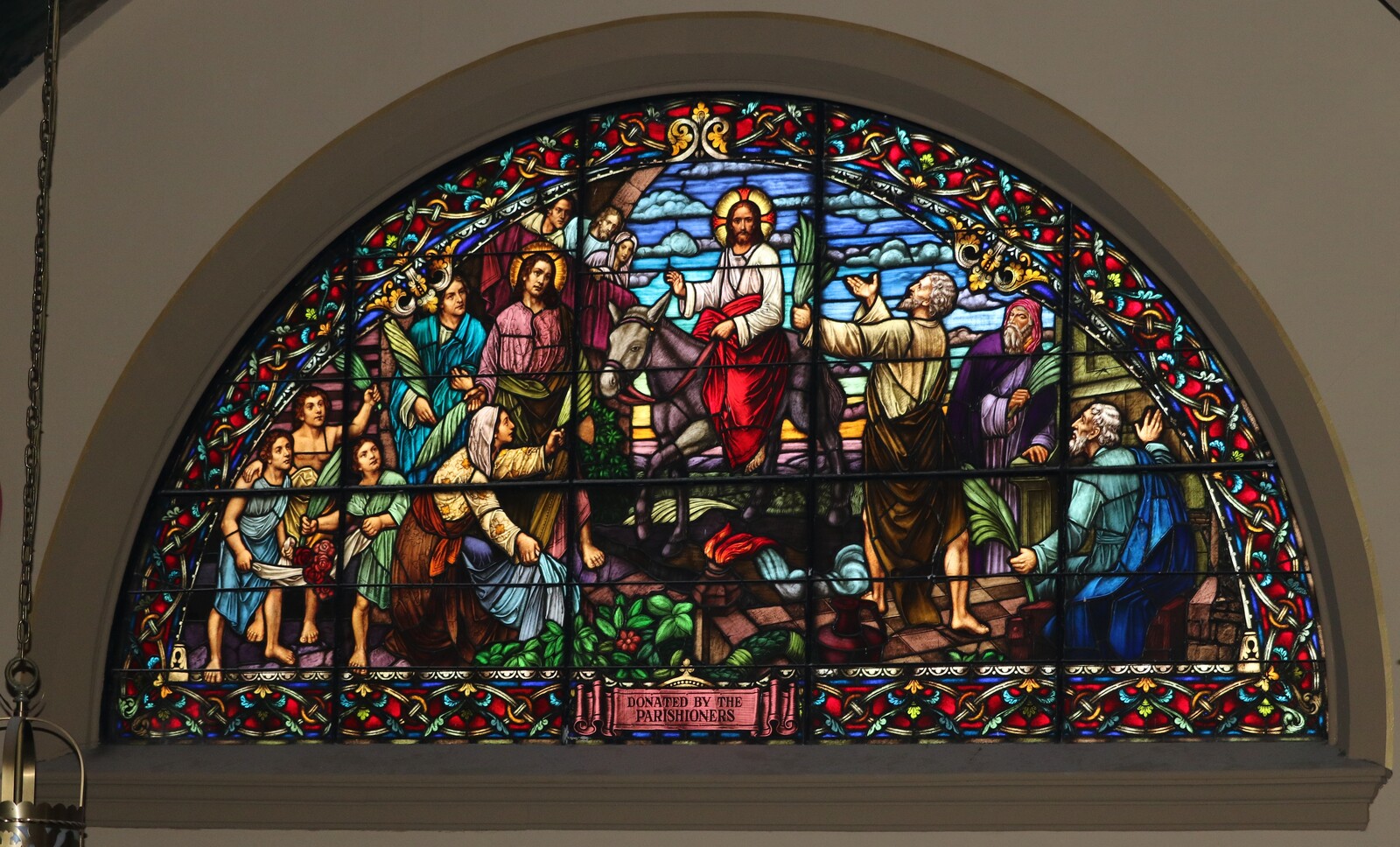
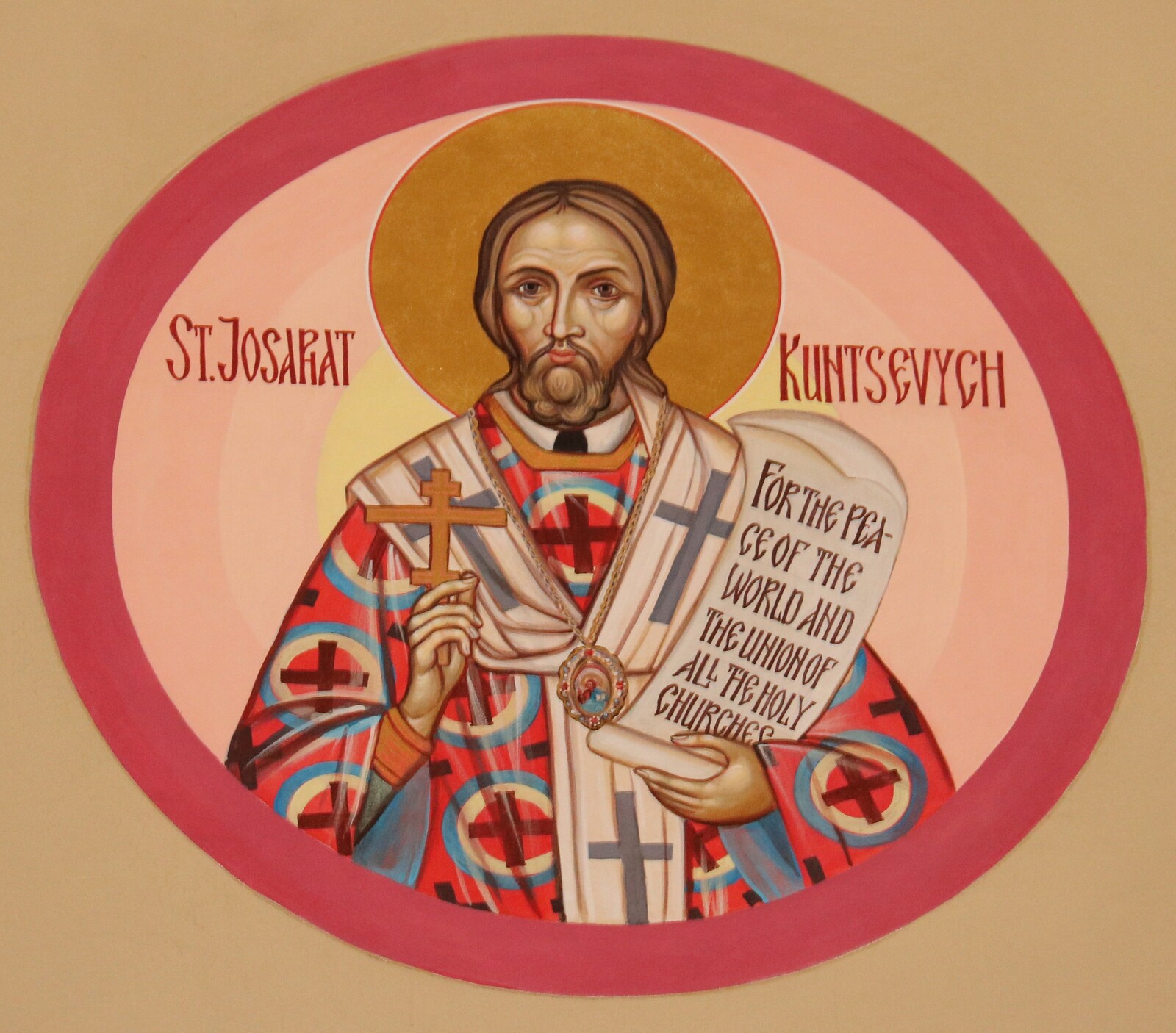
Bishop Theodore Romža and Josaphat Kuncevič on the south, flanking the window depicting Jesus’ entrance into Jerusalem on Palm Sunday. Bishops Gojdič and Romža were both victims of the Communist persecution of our Church in Slovakia and Ukraine respectively.
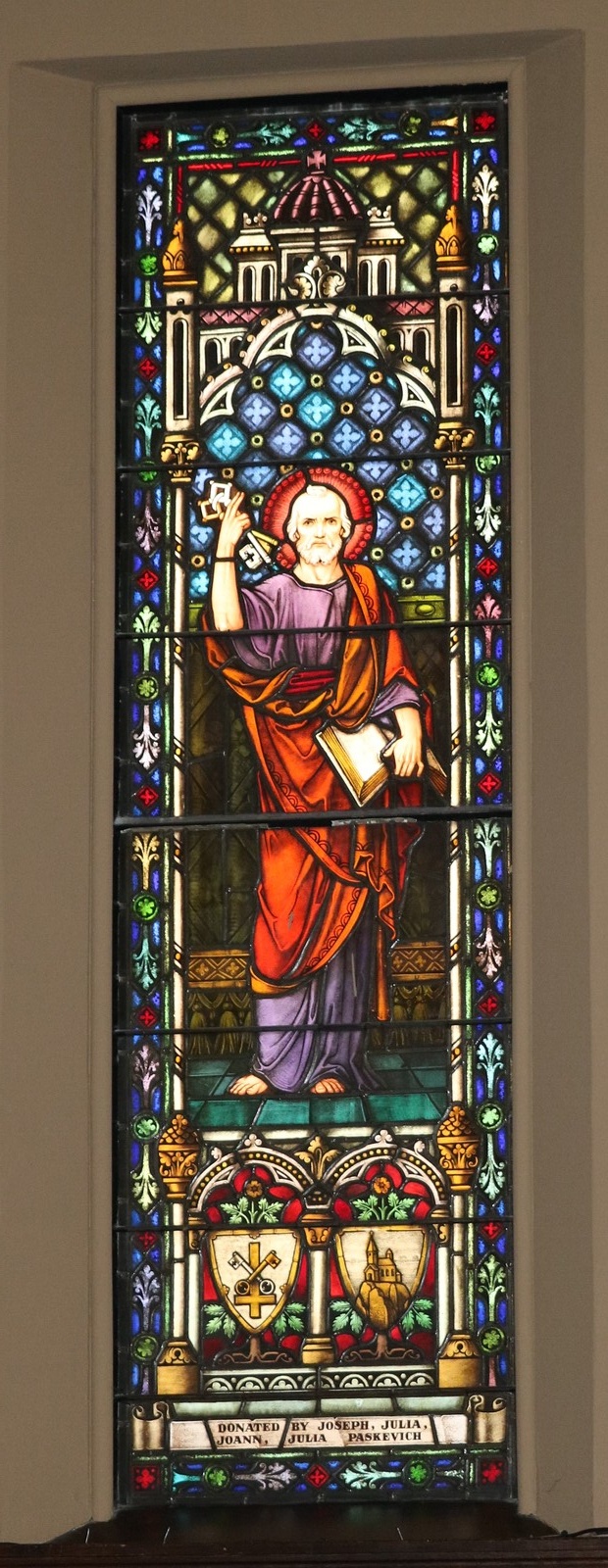
A series of stained glass windows around the nave depicts the twelve Apostles. On the south wall are (from left to right or east to west): Peter, James and John, Simon and Philip, and Jude. Two additional stained glass windows depict the Resurrection of Christ and His Ascension.
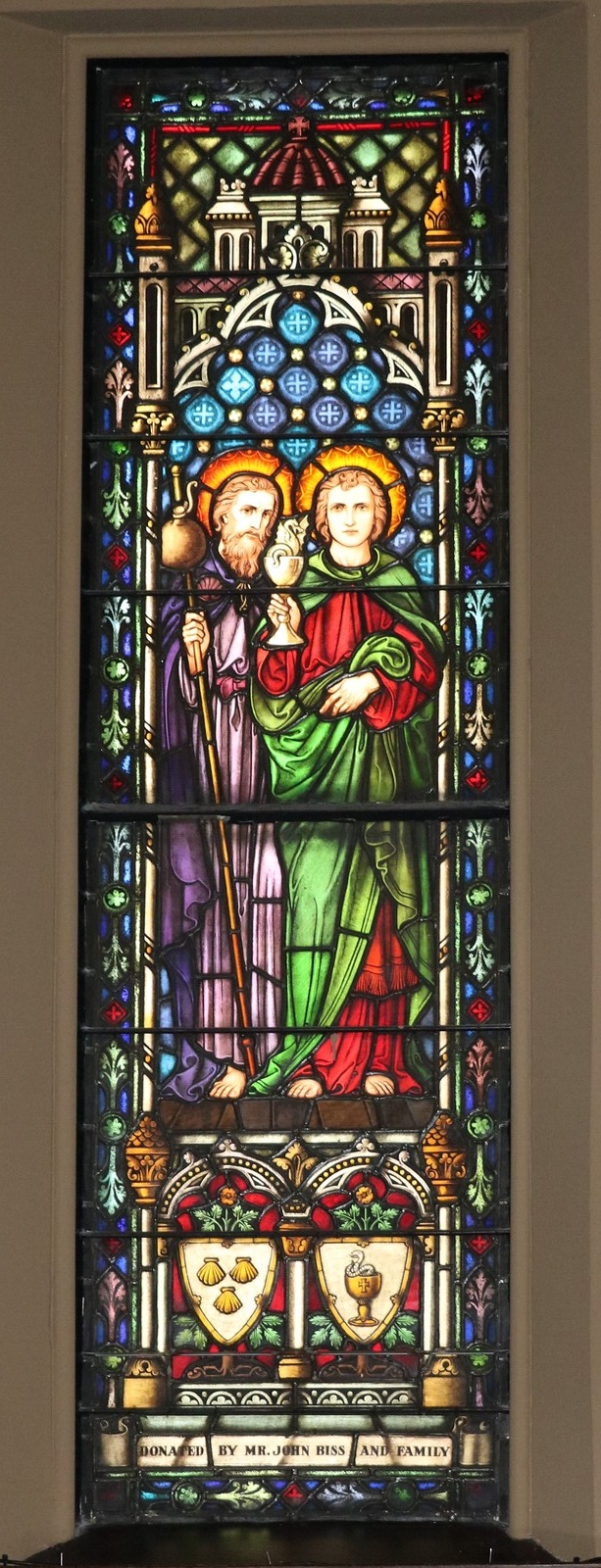
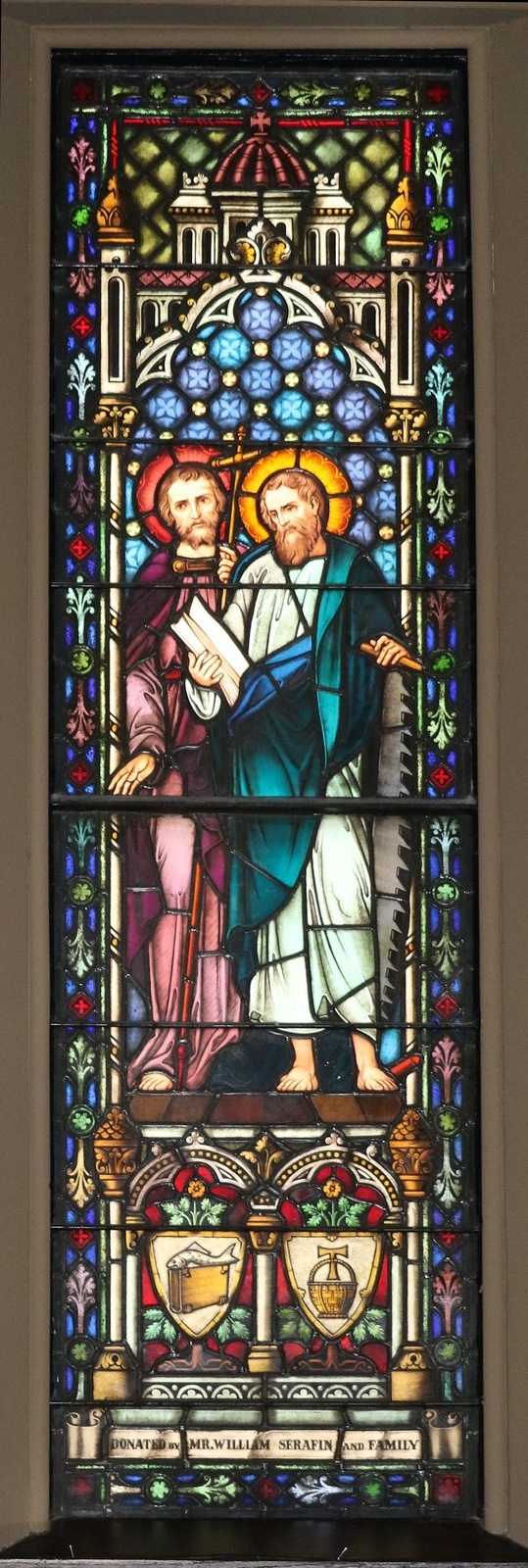
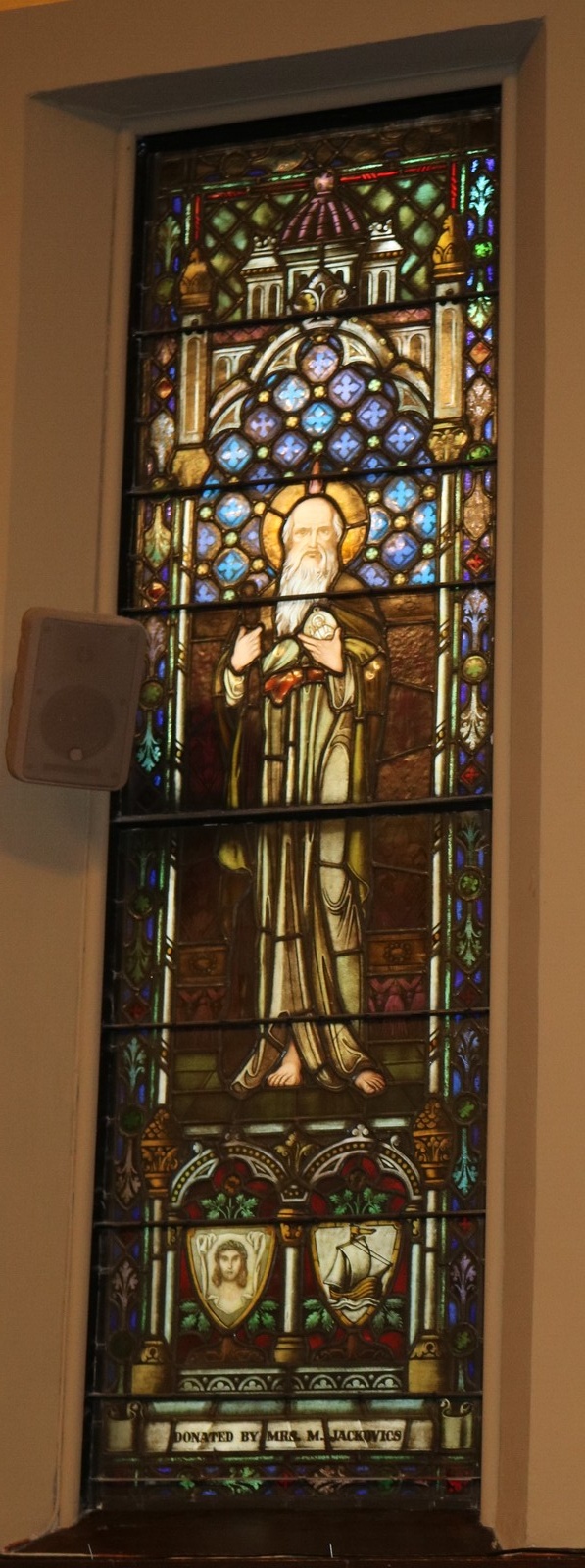

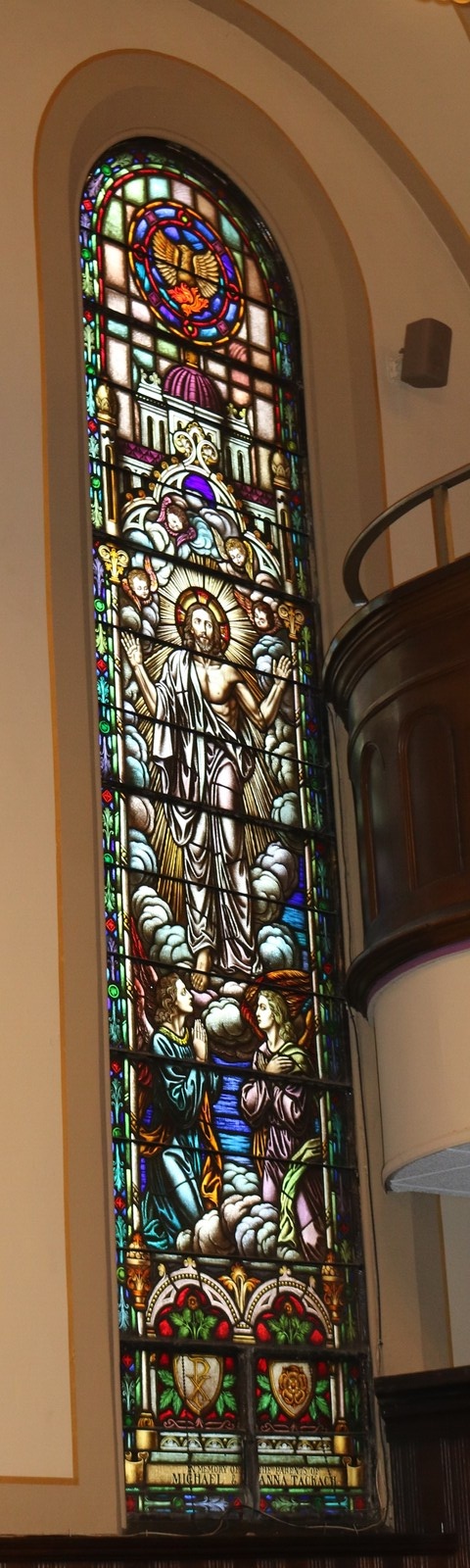
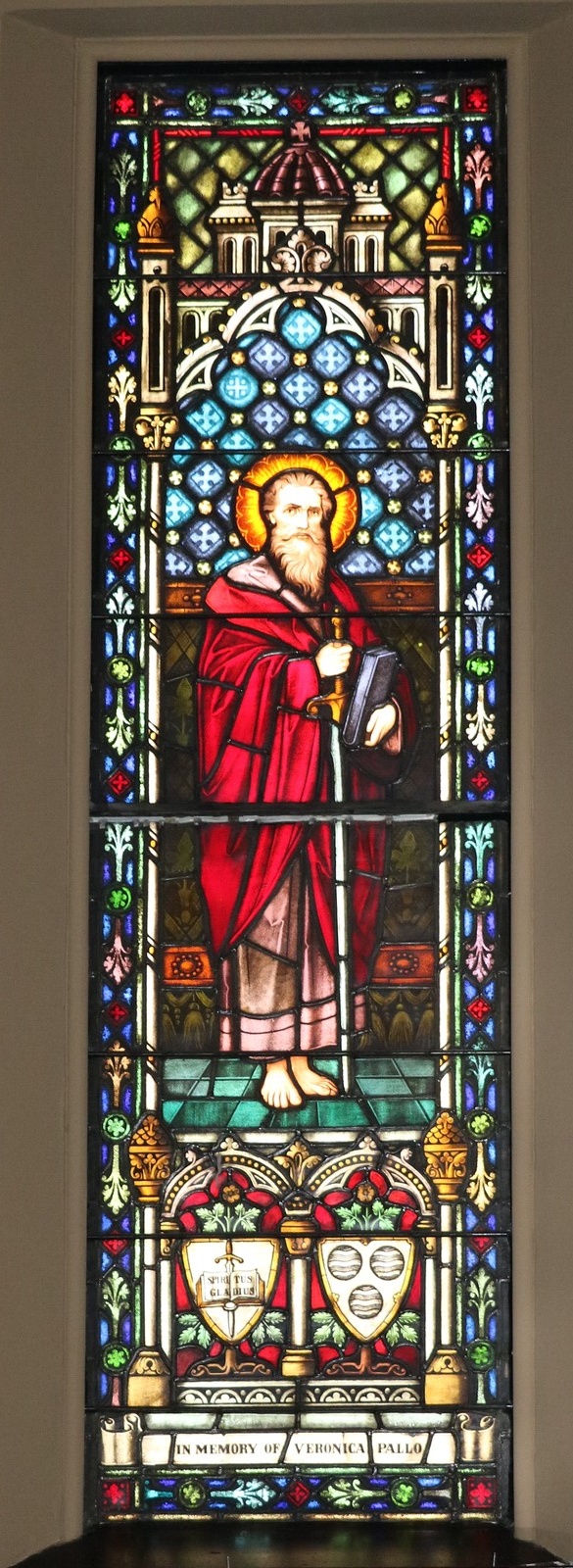
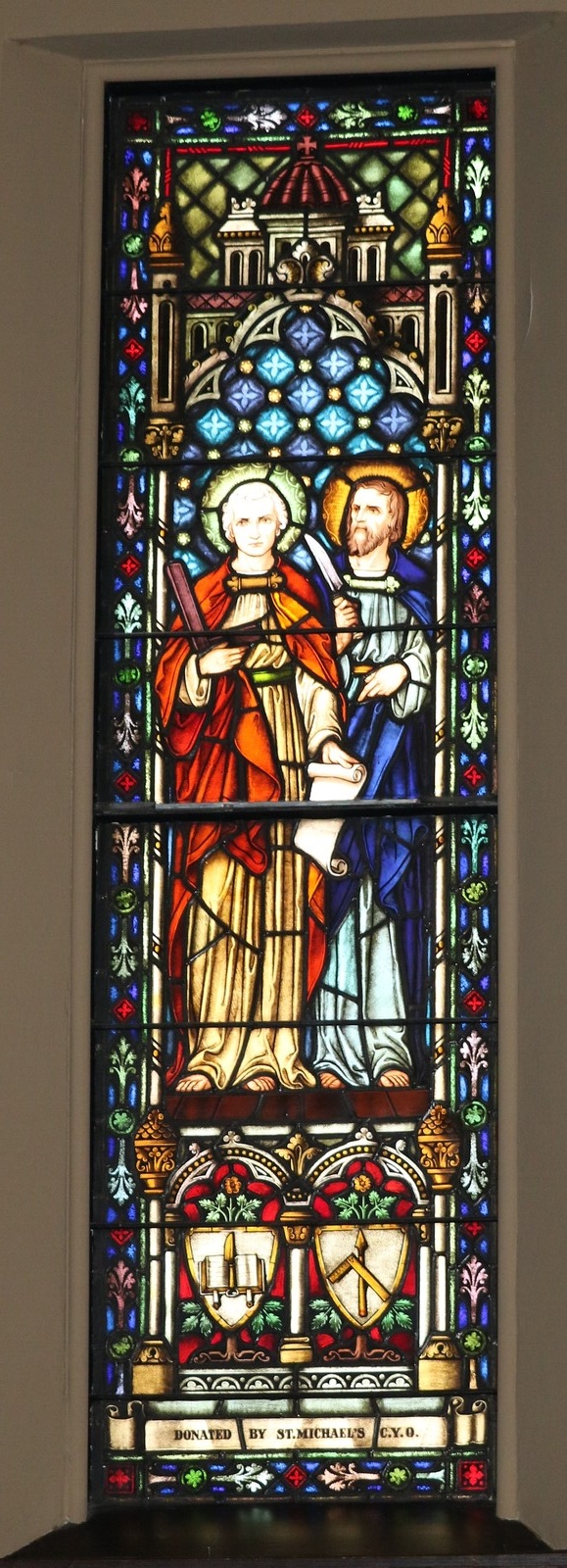
The stained glass windows on the north wall are (from right to left or east to west): Paul, Bartholomew (and Matthias?), Thomas and James, and Andrew. Two additional glass windows depict the Assumption of the Mother of God into Heaven and the Annunciation. The placement of these images recalls how the Church is built on the foundation of the Apostles and prophets (Ephesians 2:20), and how we are surrounded by so great a cloud of witnesses (Hebrews 12:1)
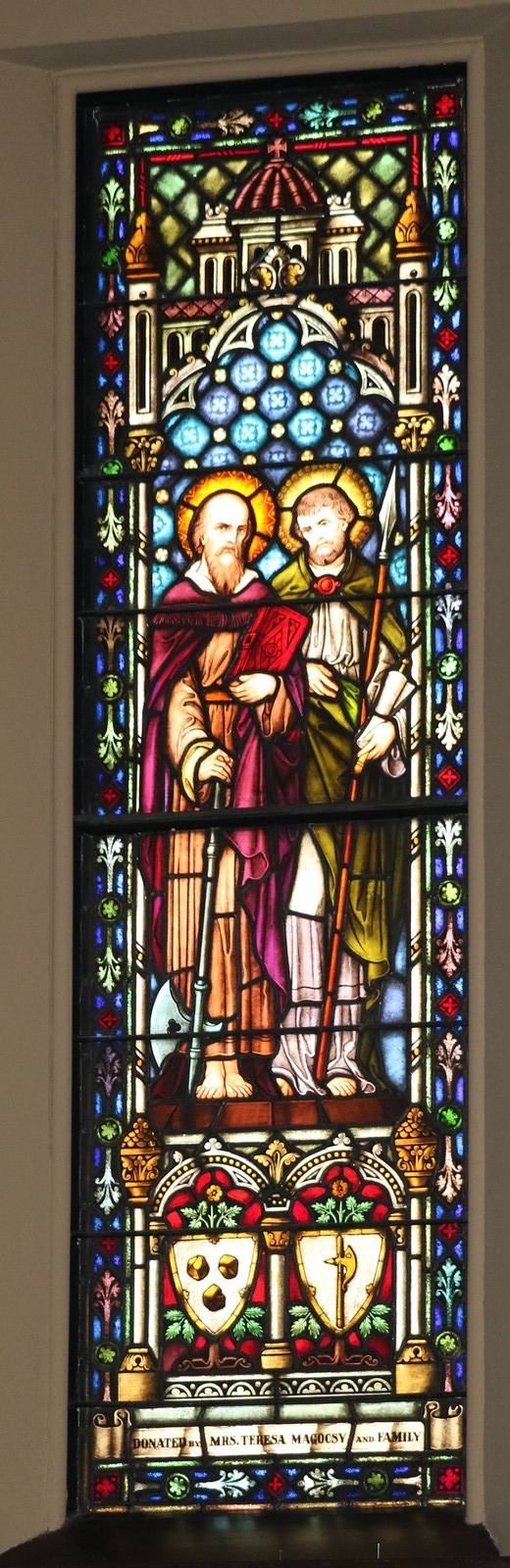
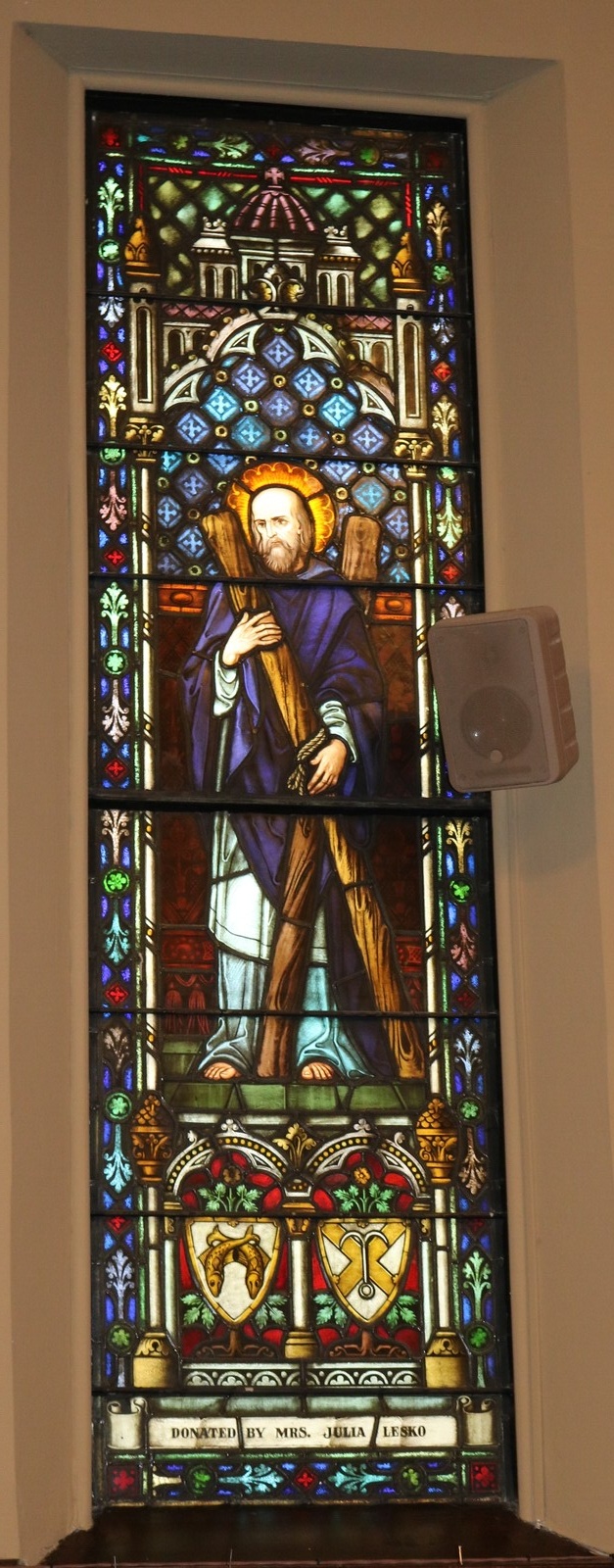

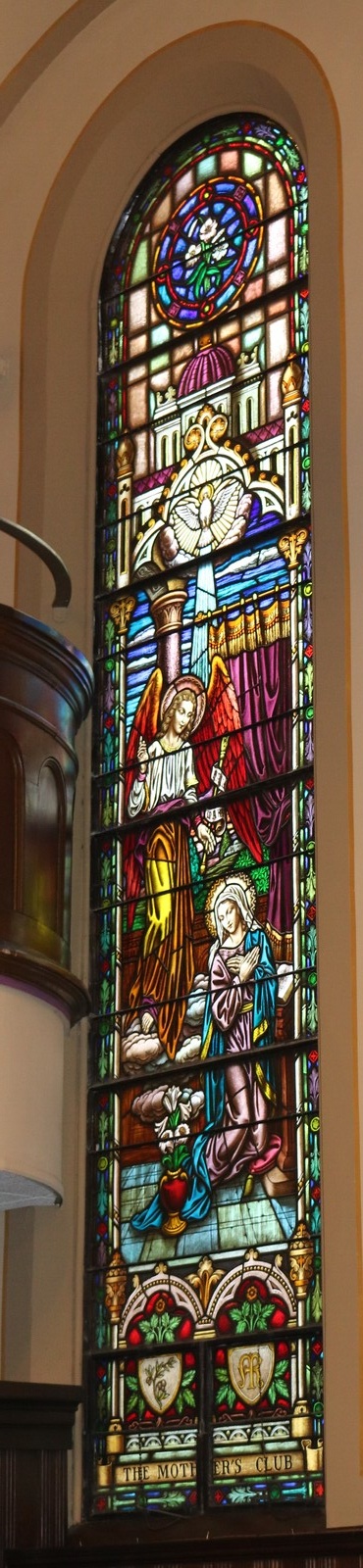
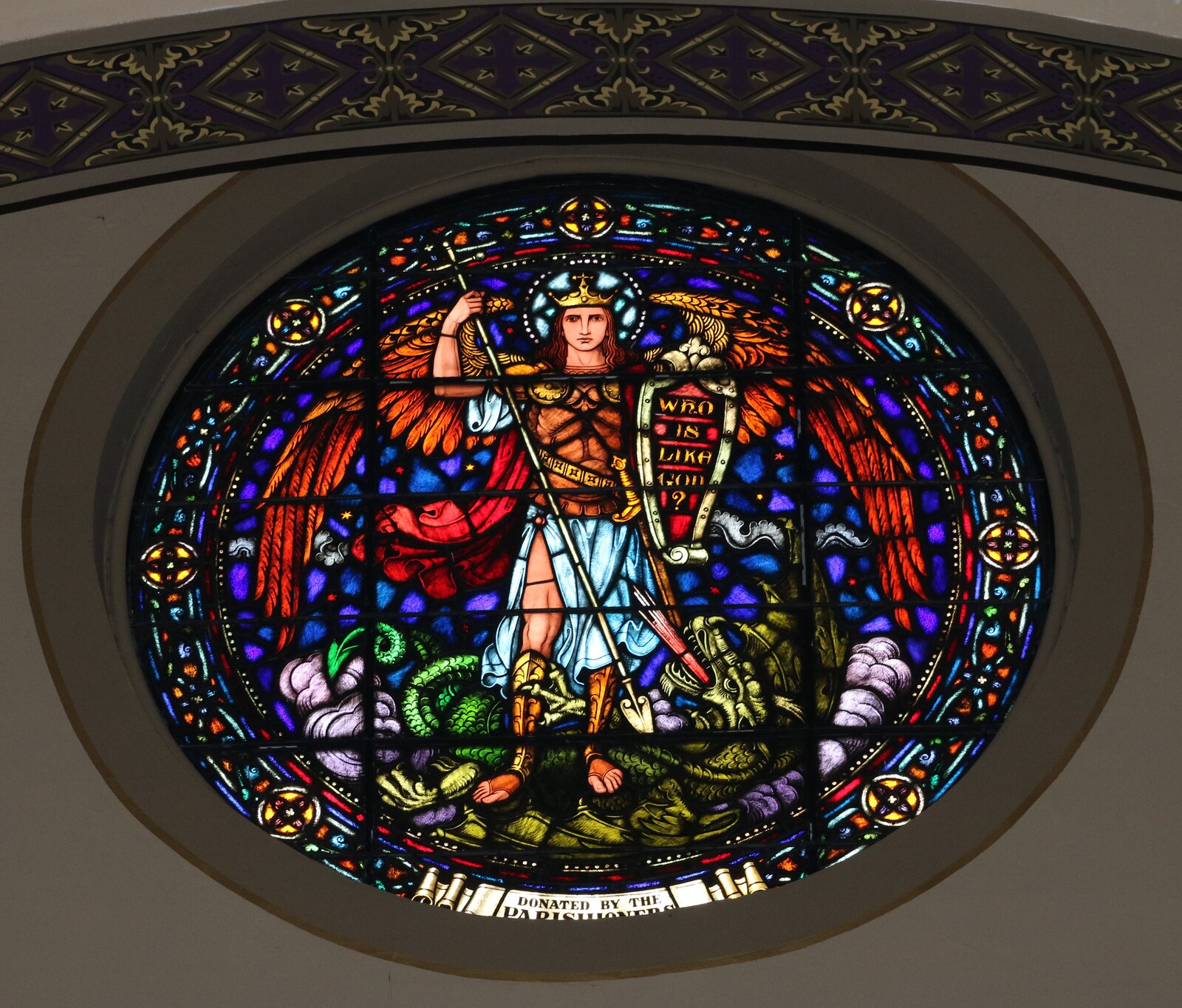
Stained glass windows are also found in the choir loft depicting St. Michael (center top), the Three Holy Hierarchs, Sts. Basil the Great, Gregory the Theologian, and John Chrysostom authors of our Liturgies and leading bishops of the fourth and fifth centuries (below St. Micheal), with the other two archangels St. Gabriel (left or south wall) and St. Raphael (right or north wall) flanking the Three Holy Hierarchs.
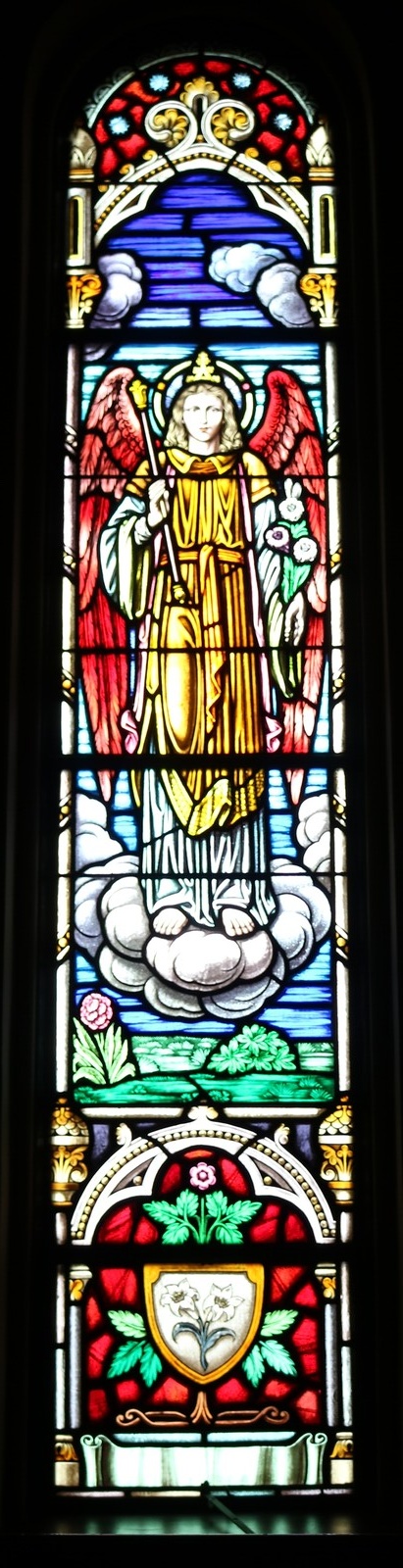
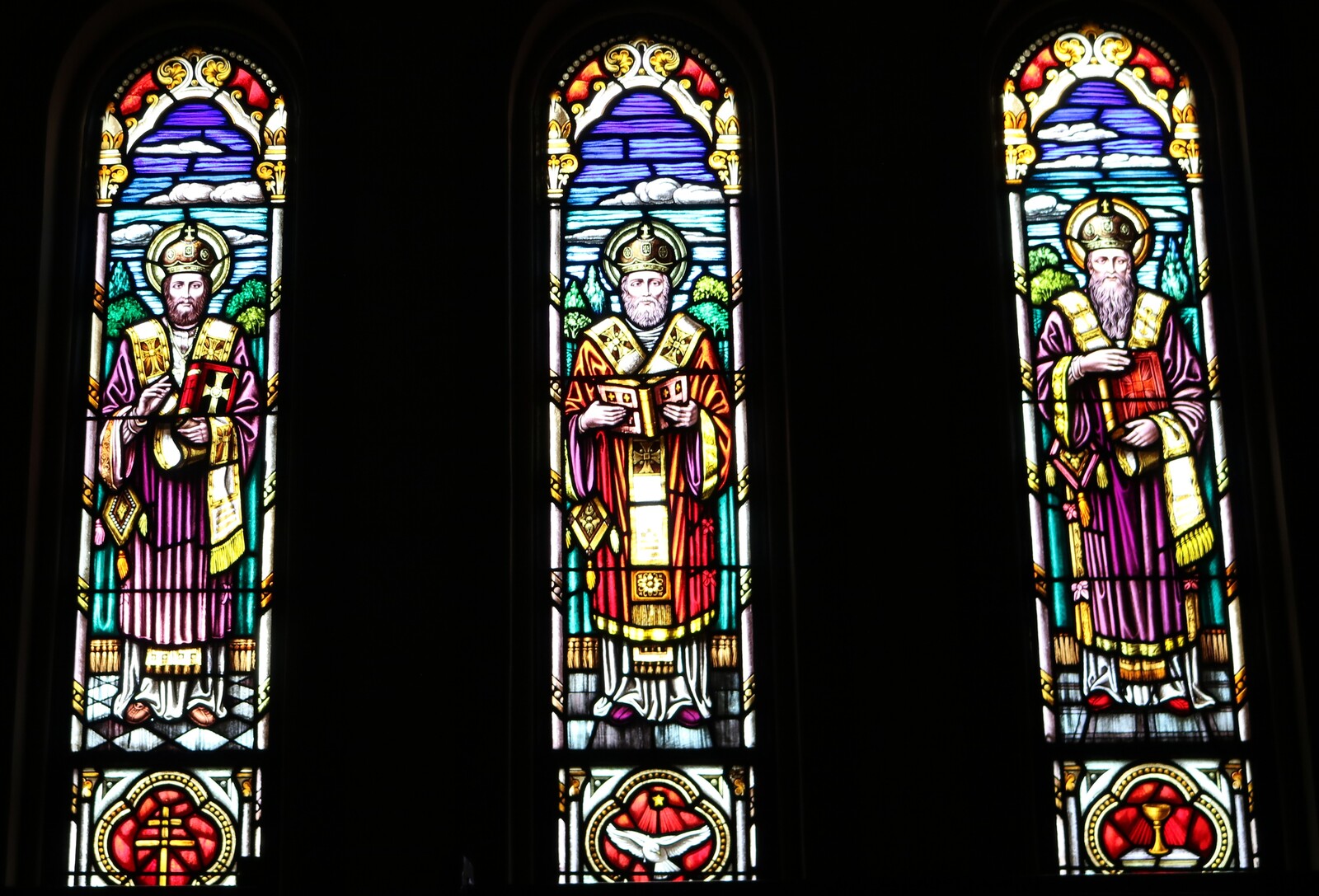
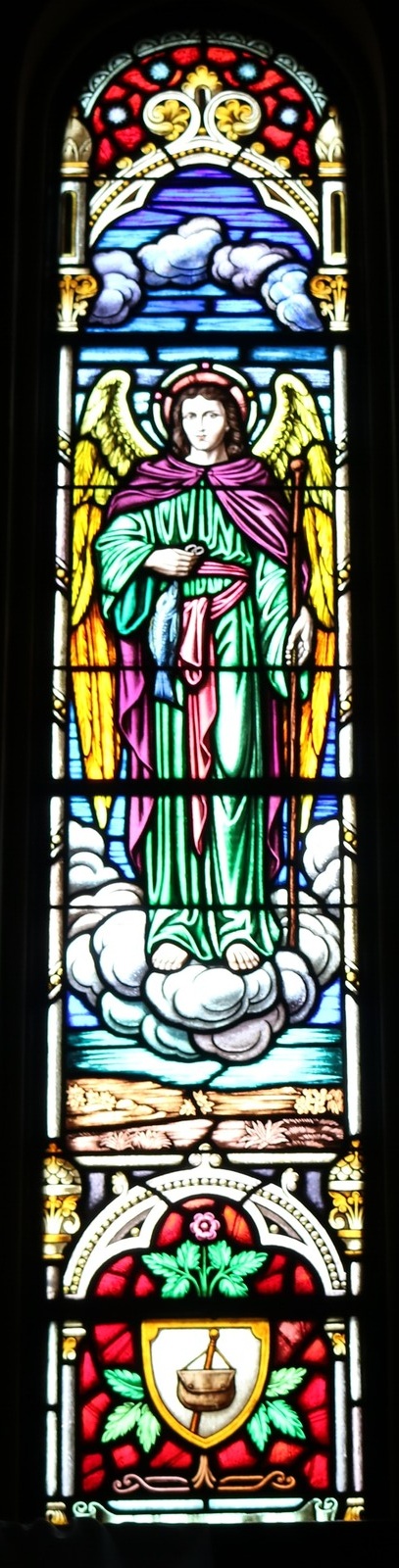
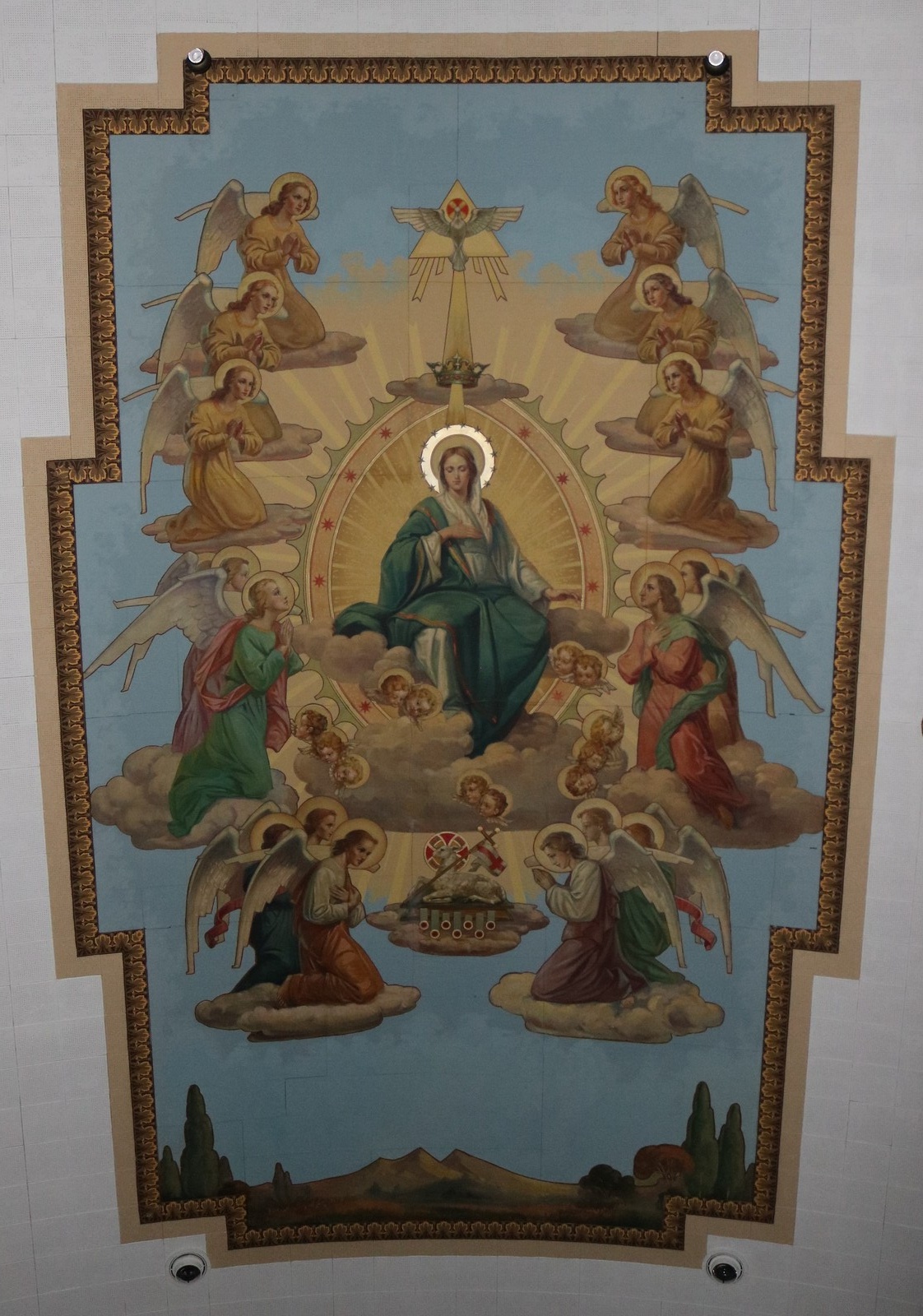
The original interior dome has been covered by the current ceiling depicting the vision of the Virgin Mary as the “woman clothed with the sun” (Revelation, 12).
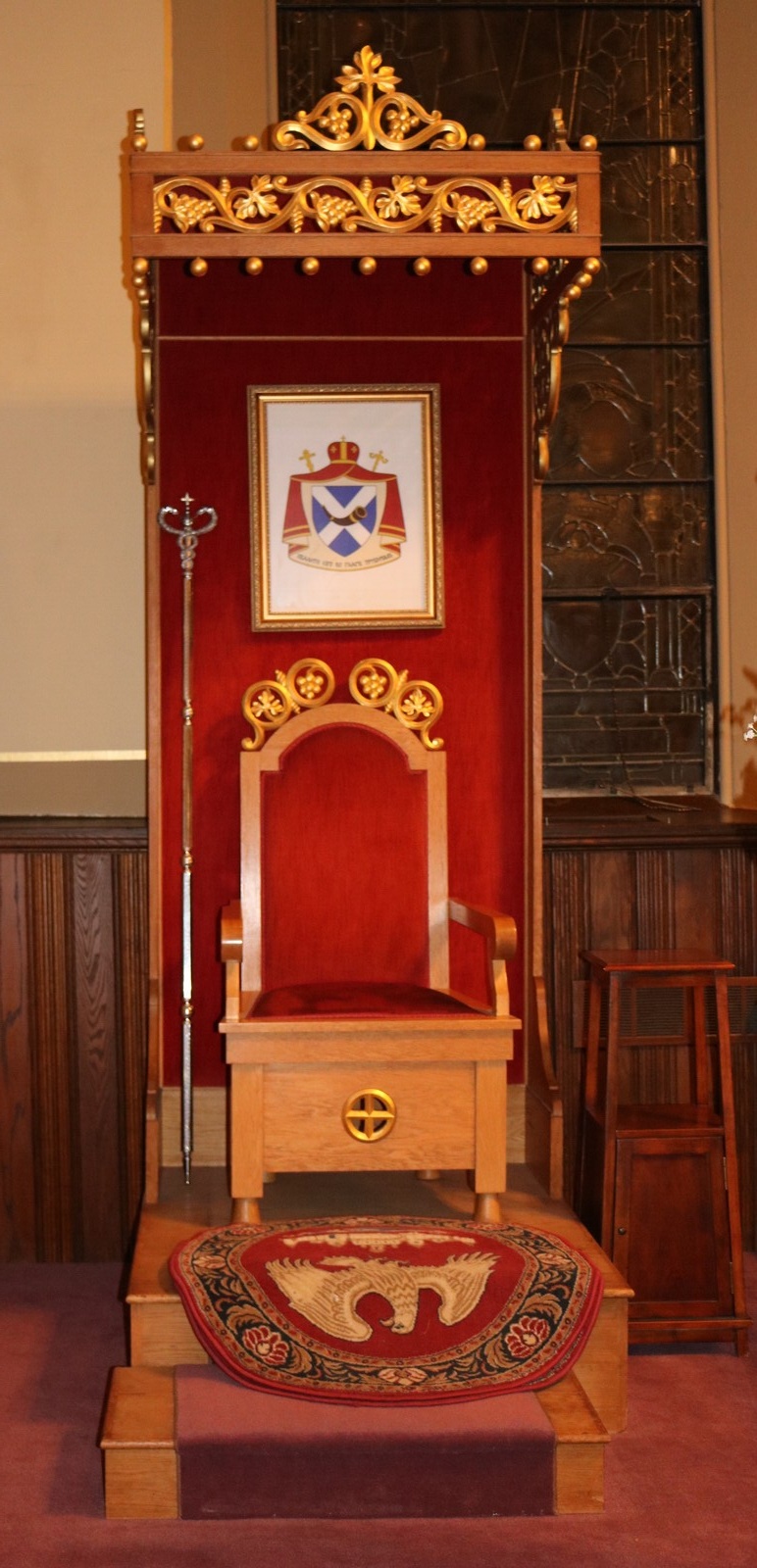
St. Michael’s was raised to the status of a Cathedral when the Eparchy of Passaic was created in 1963. The Bishop’s throne is located in the front right corner, just outside the iconostasis and in front of the icon of St. Michael’s the Archangel. The Bishop’s place is also marked by his pastoral staff and a rug depicting an eagle.
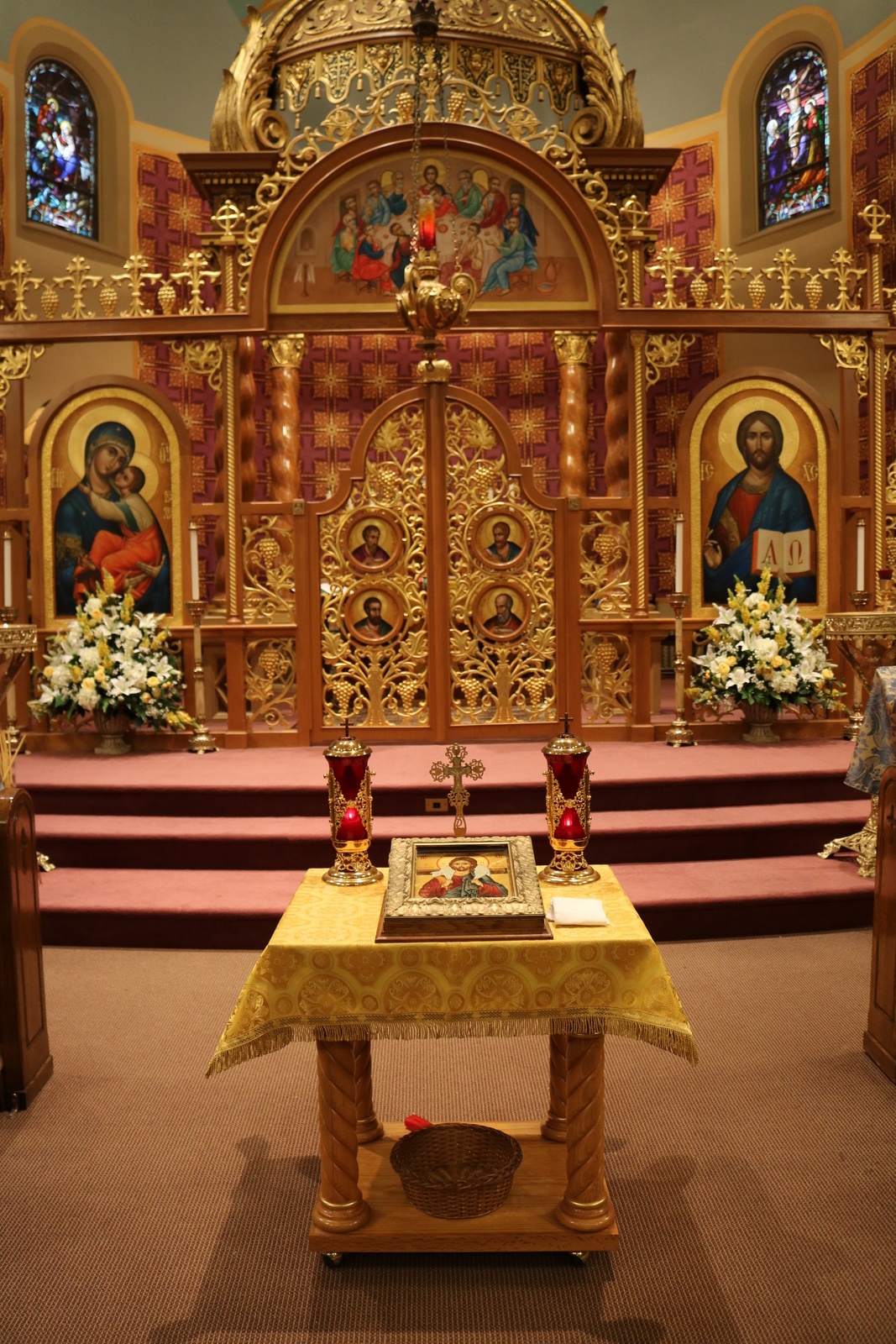
Placed outside and down the steps from the Sanctuary, is located the Tetrapod, a table that replaces the table of showbread. On it a holy icon relevant to the day or the season on the Church calendar is always displayed. It is customary to make deep bows and kiss this icon upon entering and leaving the church.
Sanctuary/Holy of Holies:
In the Old Testament, the Holy of Holies was set off from the inner court by a curtain. This has been replaced by the iconostasis or icon screen, which bears icons on the left of the Theotokos holding Jesus as a child, and on the right of Christ. Deacons and Saints flank these icons on both sides.


The icon screen is pierced by three doors. The central Royal Doors, reserved for Christ Himself, present in the Holy Eucharist and the Holy Gospels (Ezekiel 44:1-3). Icons of the four evangelists, Matthew, Mark, Luke and John, adorn the Royal Doors since it is through their Gospels that we have access to the words and deeds of Jesus Christ. Above the Royal Doors, the icon of the Mystical Supper reminds us that we celebrate the Liturgy as Jesus commanded on the night before His Passion (Luke 22:19).

The action of the divine services, which are always chanted, moves primarily through the Deacons’ Doors which bear icons of two deacons: Lawrence on the left and Stephen (Acts, 6-7) on the right.


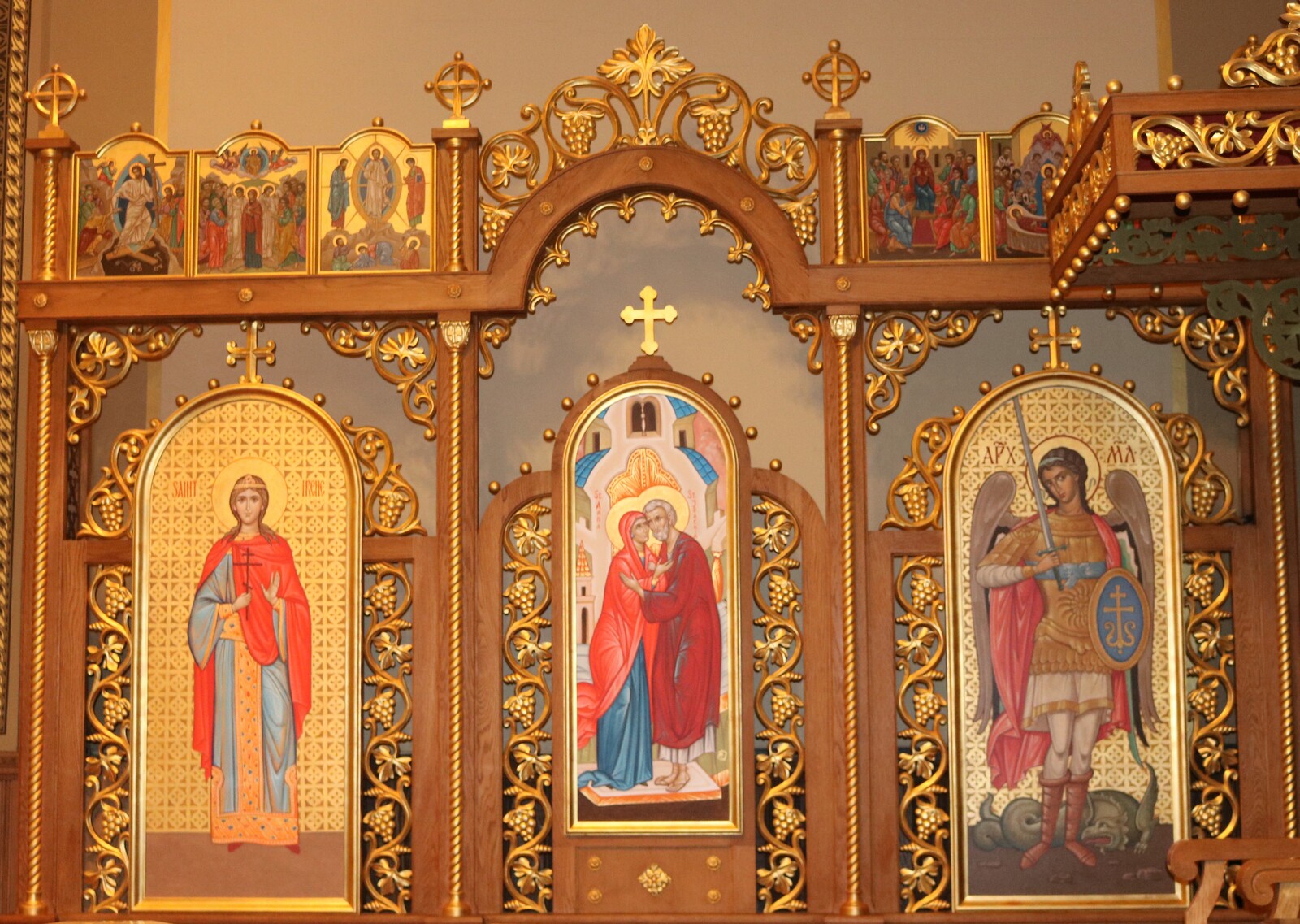
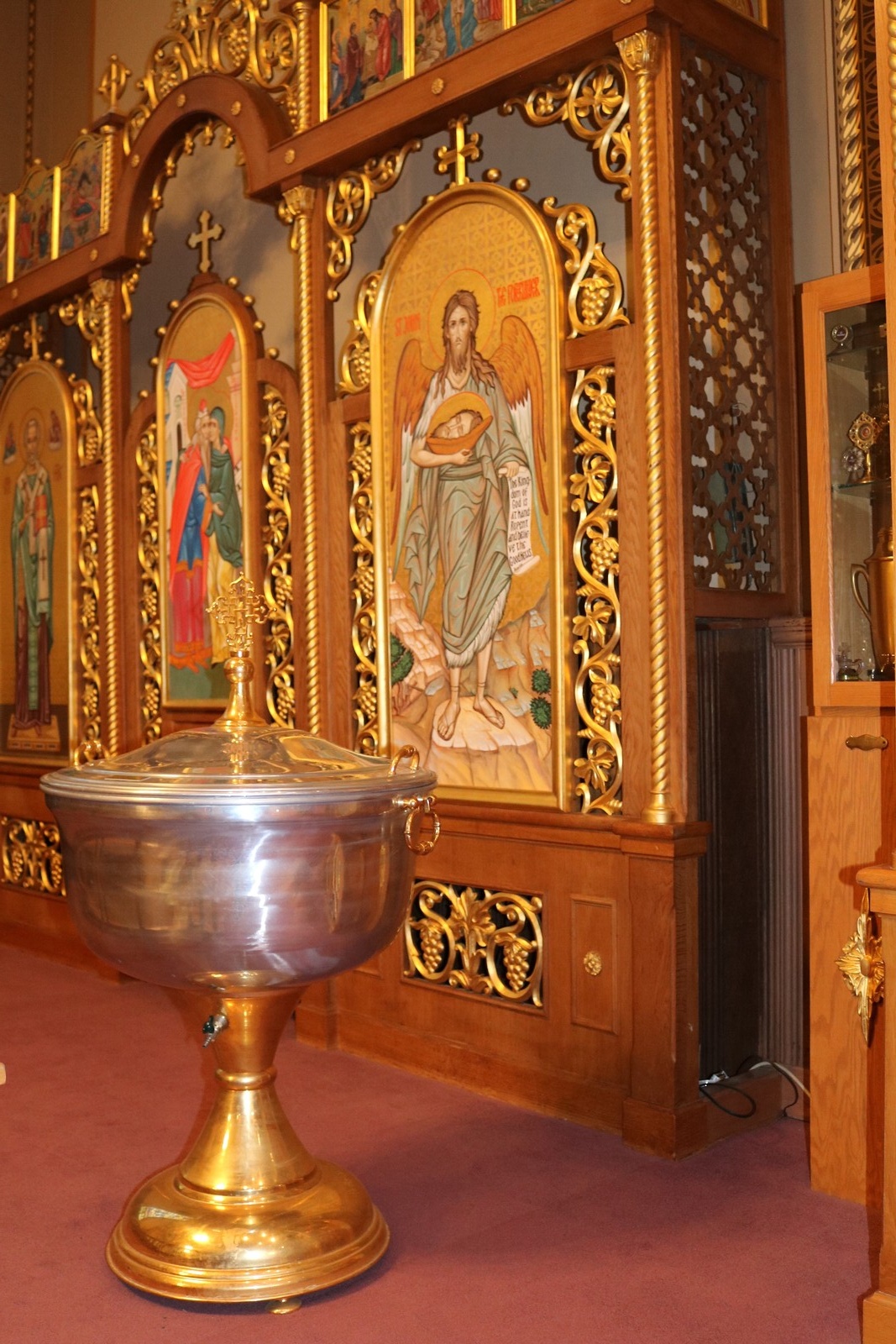
On the left of Lawrence, various relicts of Saints and of the Holy Cross are preserved together with Holy Chrism consecrated by the Bishop of our Eparchy. Continuing on are the icons of John the Forerunner, His parents Sts. Zechariah and Elizabeth, and St. Nicholas of Myra, the wonder-worker. In front of the icon of St. John the Forerunner (the Baptist) is found the baptismal font (for baptism by full immersion). On the other side (south), continuing to the right of Stephen are the icons of St. Irene, Sts. Joachim and Anna, and our patron St. Michael the Archangel. Above the icons on both sides, smaller icons depict Salvation History. It should be noticed that the iconostasis is decorated with lush golden leaves, clusters of grapes and vegetation symbolizing the garden of Eden, out of which we find ourselves after the original Fall. The garden imagery also recalls the garden of the empty tomb from which Jesus arose and the garden described in the Song of Songs.


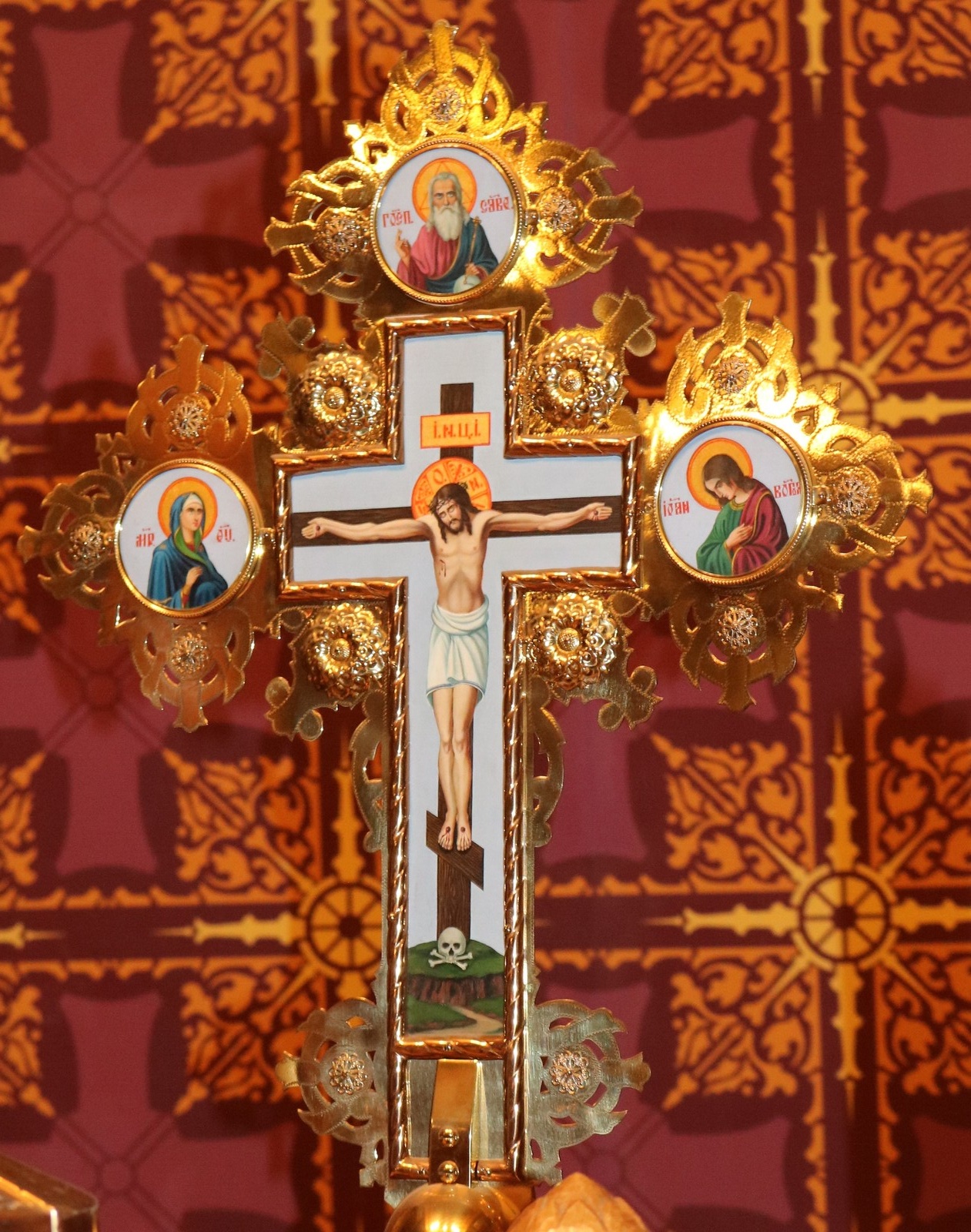
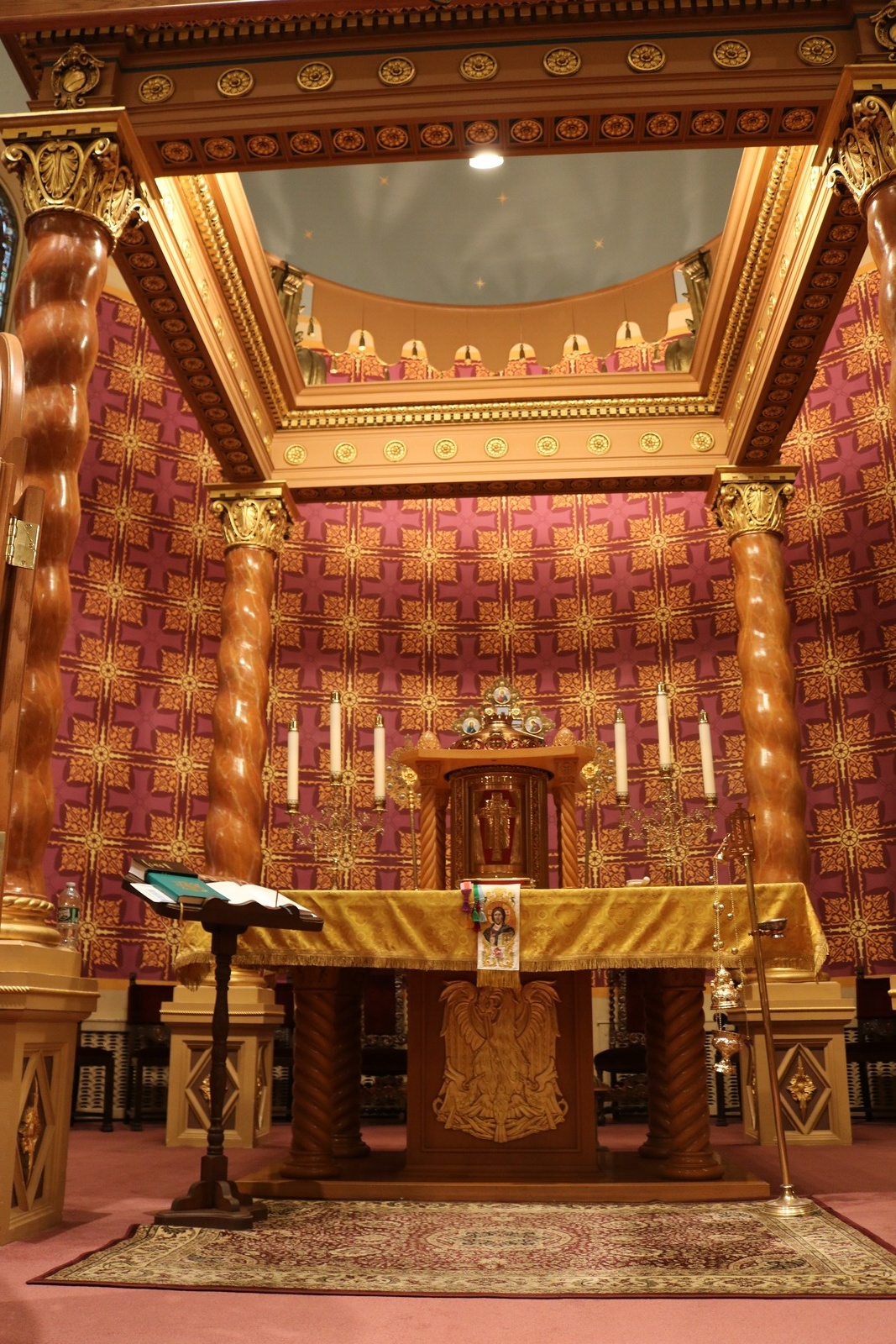
The arrangements inside the Sanctuary mirror the Jerusalem Temple (Hebrews 9:1-5). The Holy Table, where the Liturgy is celebrated, replaces the Ark of the Covenant. The book of the Gospels replaces the tablets of the Law. The Cross of Christ replaces the rod of Aaron, and the tabernacle containing the Holy Eucharist replaces the jar of manna.
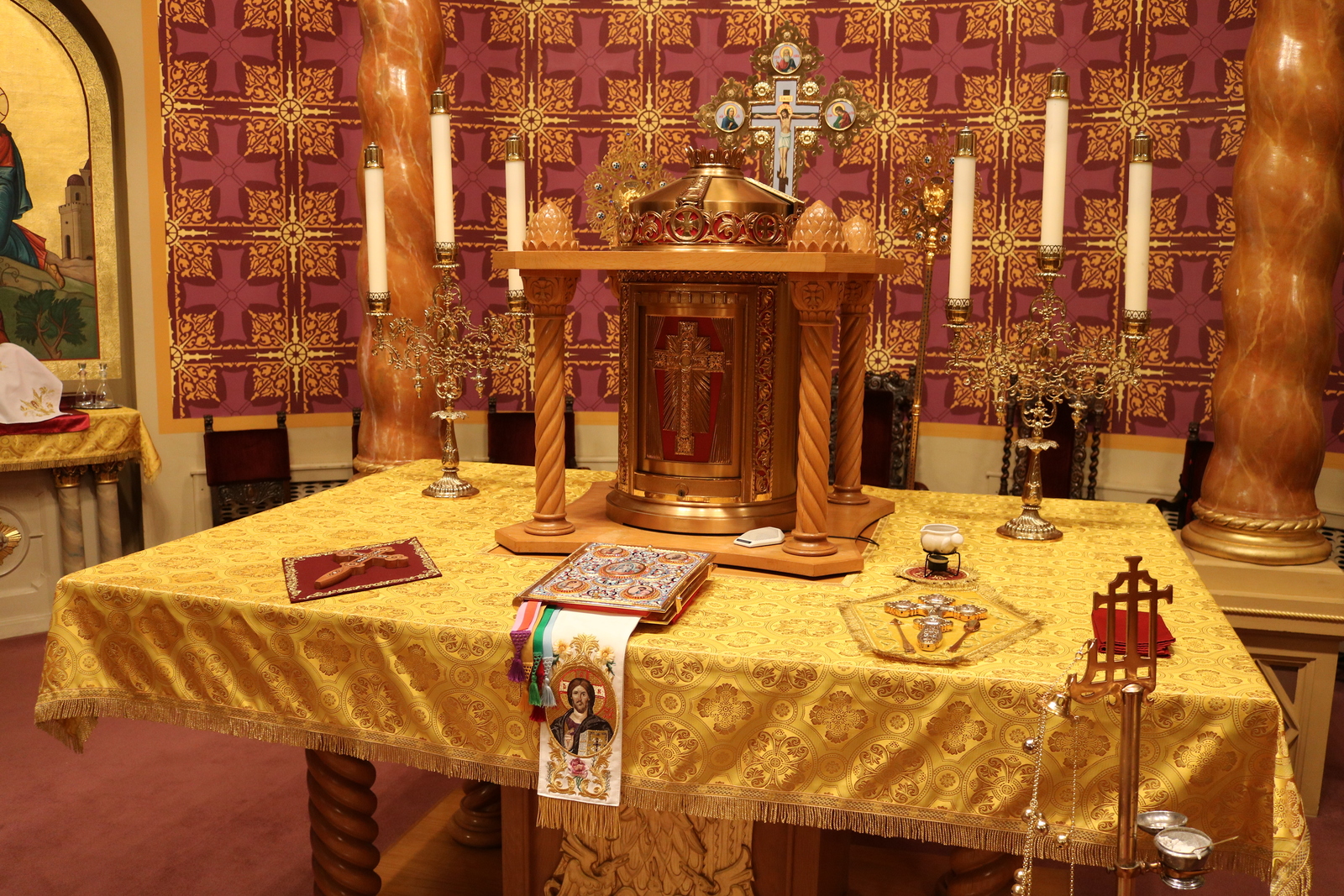
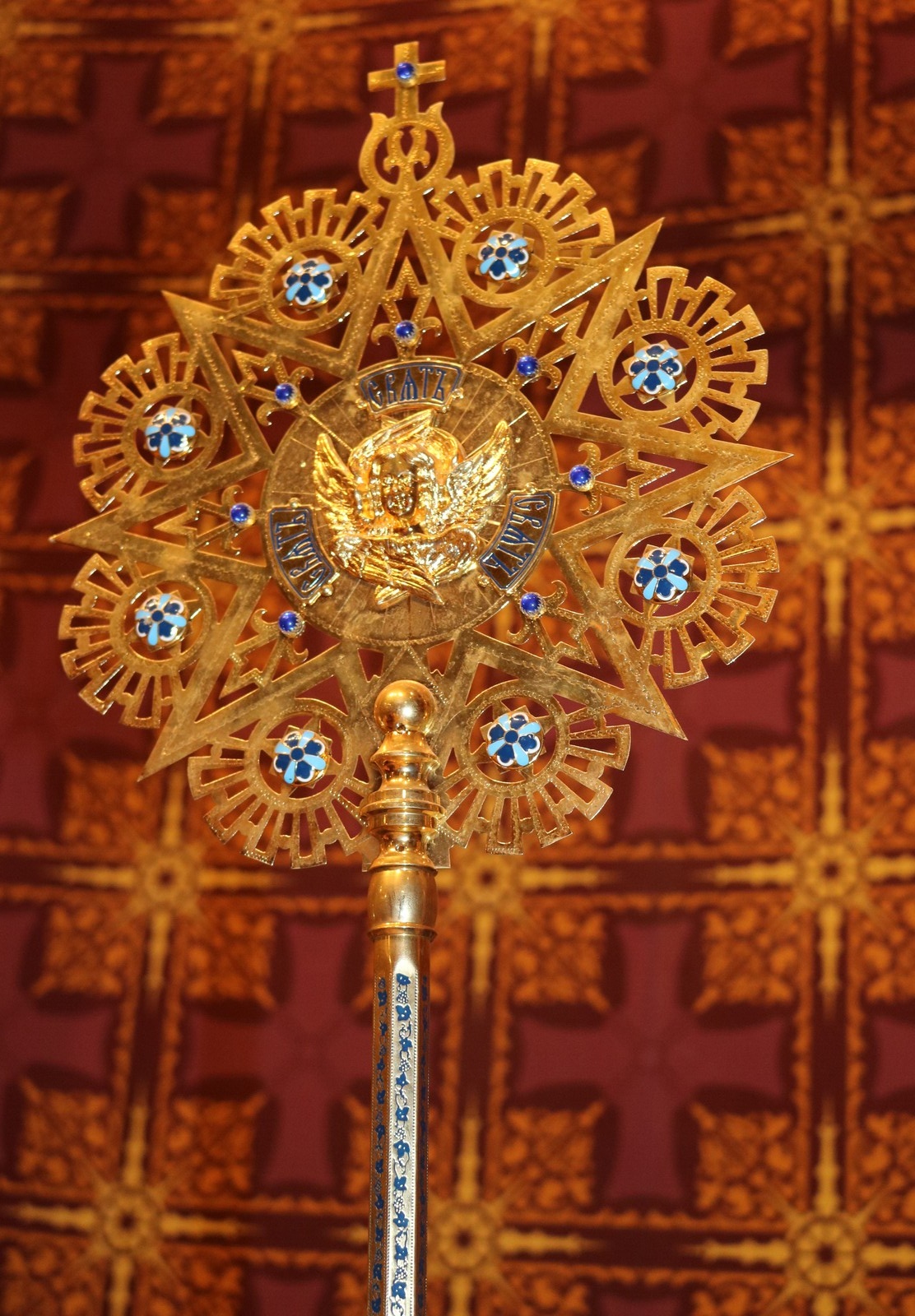
The external lamp (Exodus 27:20-21) hangs above the Royal Doors indicating God’s presence in His Temple. Behind the Holy Table, the golden fans, called “Ripidia,” with images of the six winged Seraphim and the inscription “Holy, Holy, Holy,” replace the Cherubim of Glory (Exodus 25:18; Isaiah 6). The Mercy Seat, an empty space above the Ark of the Covenant where the blood sacrifice was offered on the Day of Atonement, is filled (and fulfilled!) by the Cross of Christ.

On the wall of the apse behind the Holy Table is an image of Christ Pantocrator (Revelation 1:8; 22:13). The baldacchino or canopy over the Holy Table is typical of Baroque architecture and recalls the original tent in which Israel worshipped. On the inside of the dome of the baldacchino an image of a dove is depicted, a representation of the Holy Spirit coming upon the priest and the power of the Most High overshadowing him during the epiclesis of the anaphora as the Son of God becomes incarnate making His dwelling among us for our salvation (Luke 1:34-35; Exodus 40:35).


Still inside the Sanctuary, the icon at the Proskomidija (where leavened bread and wine are prepared for the celebration of the Eucharist) is Christ’s agony in the garden. The icon at the Diakonnik (where various items needed for worship are stored) depicts the near-sacrifice of Isaac by Abraham (Genesis, 22), foreshadowing the willing sacrifice of God’s own Beloved Son.
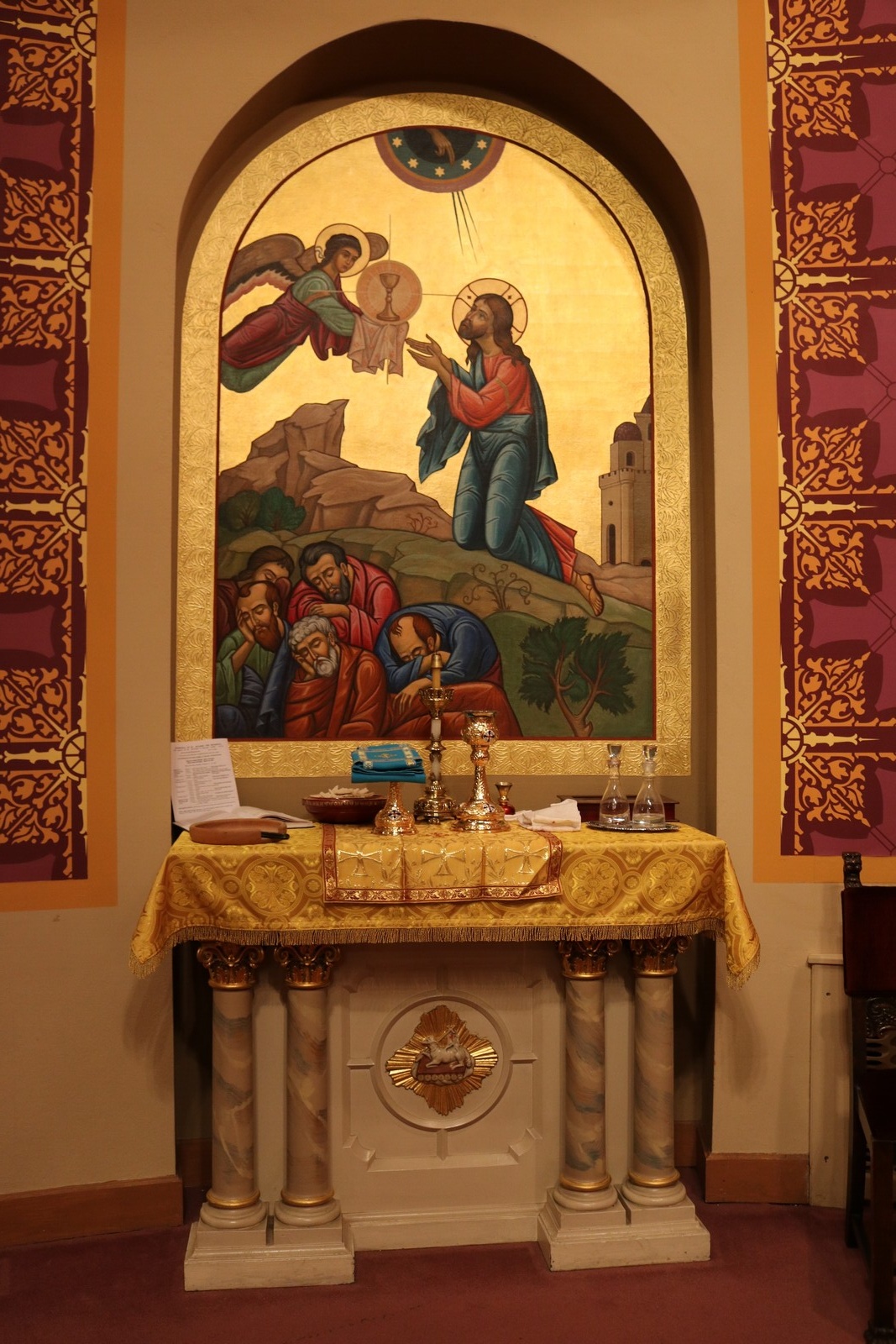
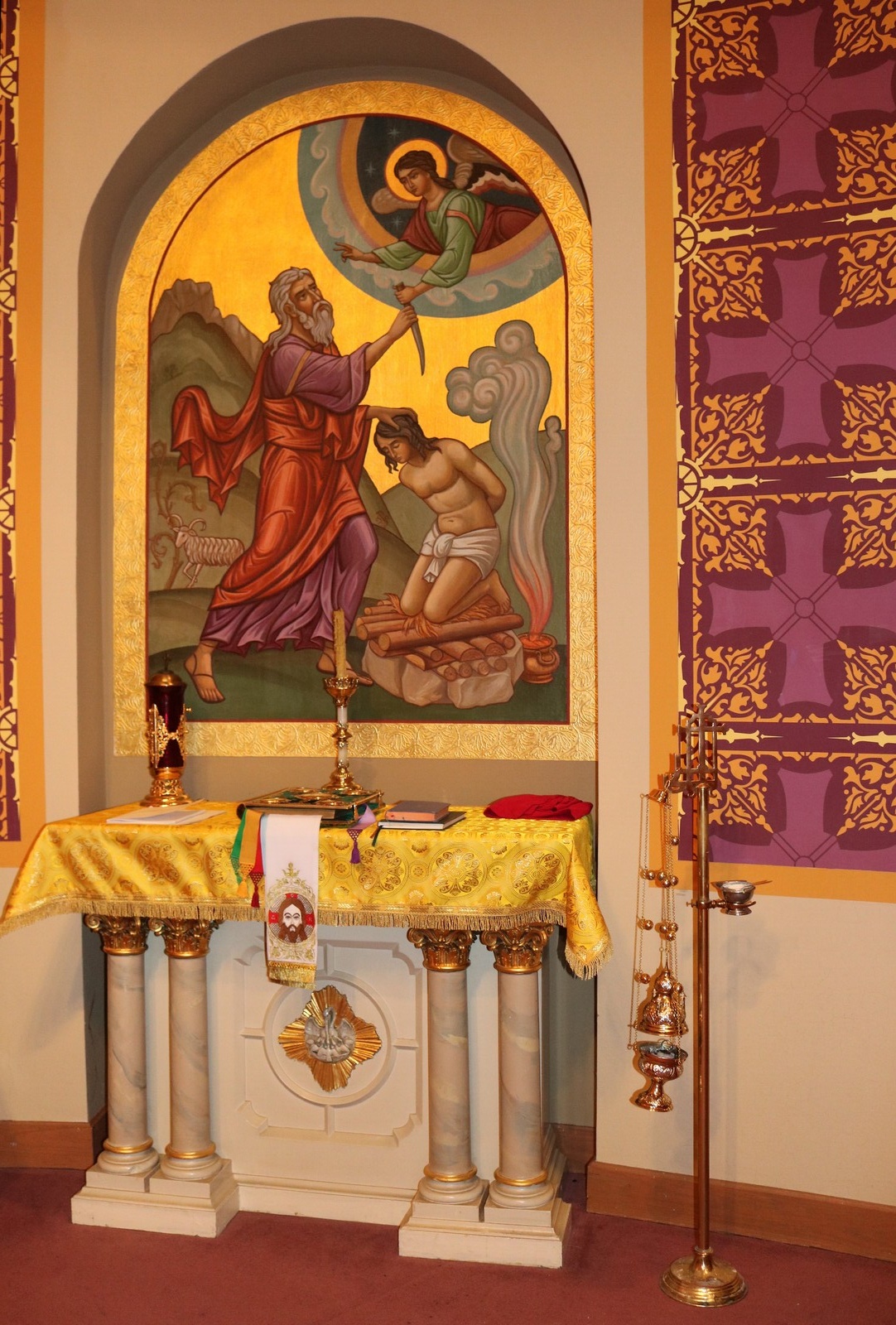
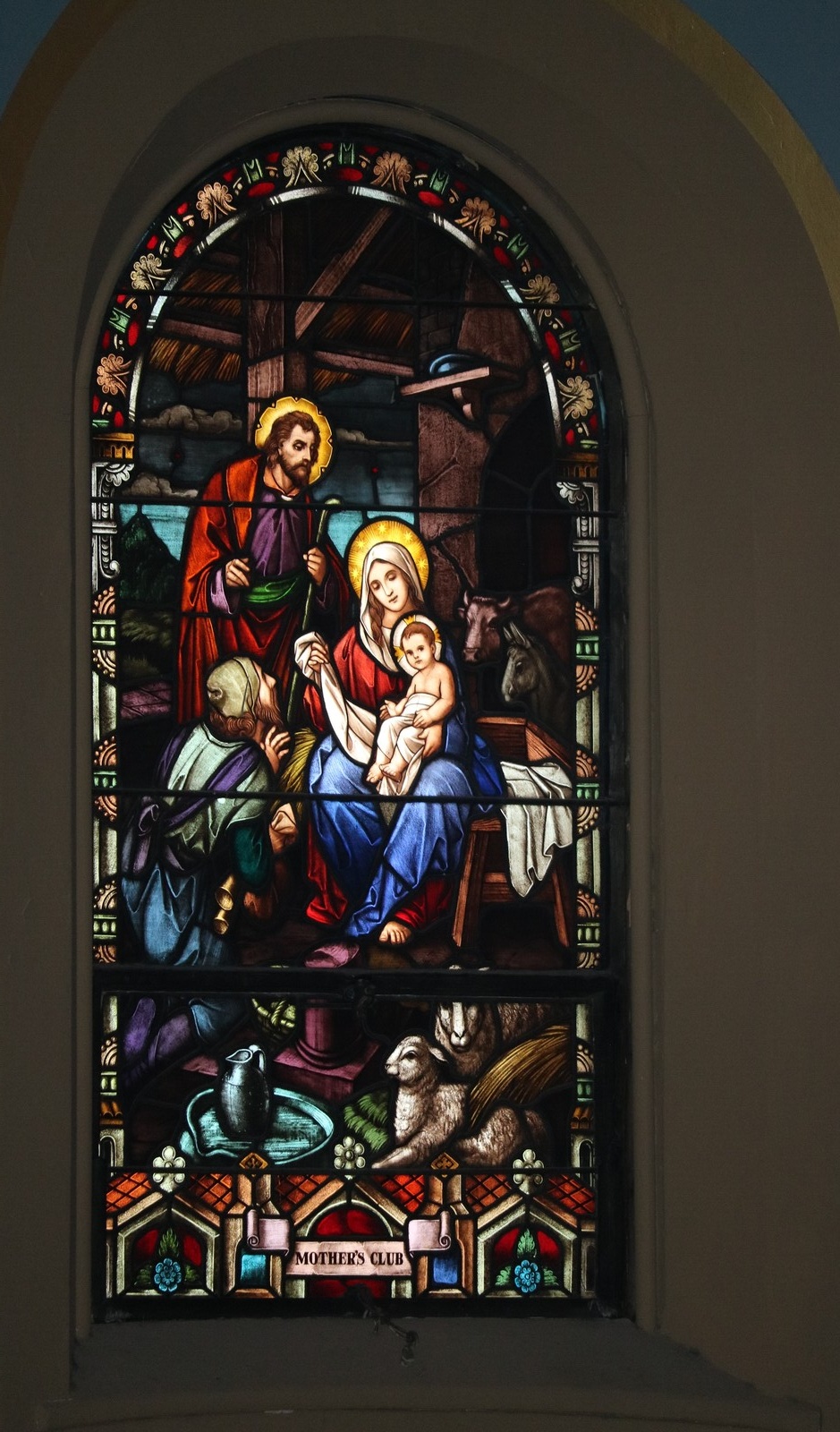
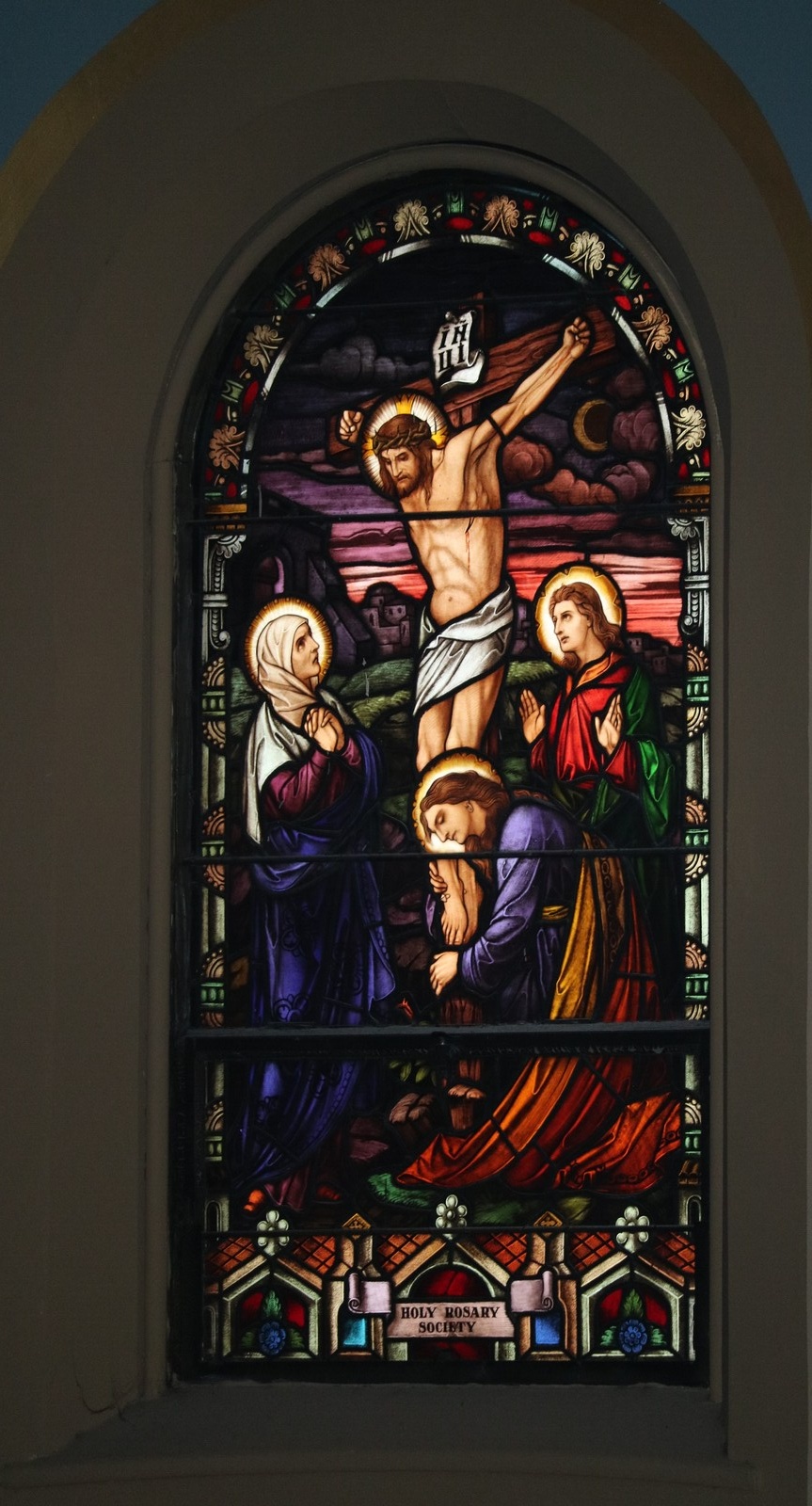
Two small windows above them depict the Nativity of Christ and the Crucifixion of Christ respectively.
As one leaves the vestibule into the church towards the sanctuary, one leaves behind the outer world and is drawn closer and closer to Heaven and to God, the final destination.

We hope you appreciated this brief virtual tour of our Cathedral and hope you will be able to come and visit in person and join us in praising our God and find His presence and Peace.
Glory to Jesus Christ!